


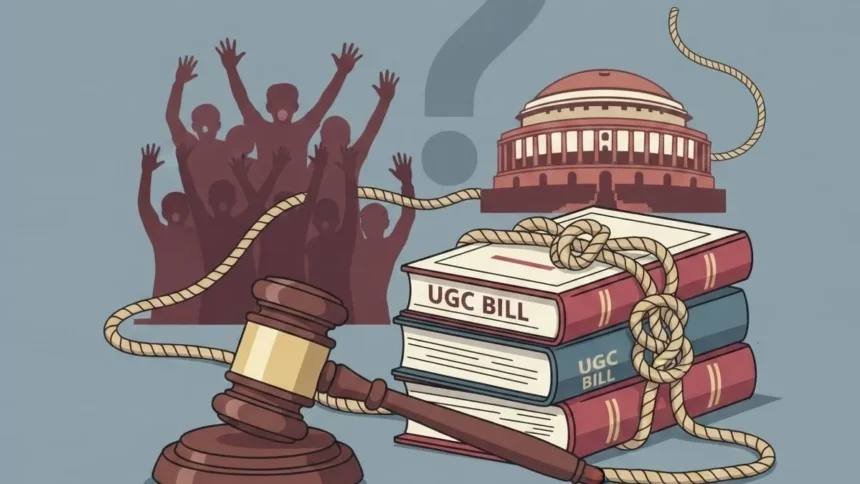
India’s higher education regulator, the University Grants Commission (UGC), has introduced updated regulations aimed at curbing caste-based discrimination across colleges and universities. This move comes against the backdrop of a significant rise in complaints of caste bias — which have more than doubled over the past five years — prompting calls for stronger institutional accountability.
The Promotion of Equity in Higher Education Institutions Regulations, 2026 replace earlier guidelines from 2012 and represent a shift from advisory standards to enforceable obligations for all higher education institutions (HEIs).
Key Features of the 2026 Equity Regulations
Under the new framework, the UGC has mandated several structural changes to promote inclusion and ensure fairness on campuses:
1. Equal Opportunity Centres (EOCs)
Every university and college must establish an Equal Opportunity Centre to promote equity and support disadvantaged students. These centres are responsible for receiving and addressing complaints related to discrimination.
2. Equity Committees
Each EOC must be backed by an Equity Committee, chaired by the head of the institution and including representation from Scheduled Castes (SC), Scheduled Tribes (ST), Other Backward Classes (OBC), women, and persons with disabilities. These committees are required to meet at least twice a year.
3. Rapid Response and Transparency
Institutions must operate 24/7 equity helplines, and committees must convene within 24 hours of a complaint. Bi-annual reports on campus demographics, complaints, and resolutions must be published, introducing greater transparency.
4. Enforcement and Penalties
Higher education institutions that fail to comply with the regulations face serious repercussions — including being barred from UGC schemes, losing the ability to offer degree or online programmes, or even losing recognition as an accredited institution.
Why Complaints Have Increased
UGC data shows that complaints related to caste-linked bias have jumped by 118.4% over the last five years, rising from 173 cases in 2019-20 to 378 in 2023-24. This increase has been cited by regulators as a key reason for strengthening anti-discrimination measures.
Experts and advocacy groups argue that the rise in complaints reflects deeper systemic issues on campuses, including implicit bias, exclusion from academic activities, and unequal treatment that undermines dignity and equality in education.
Government and Public Response
Supporters of the regulations say they mark a necessary step toward making Indian campuses more inclusive and safer for all students. The updated rules broaden the definition of discrimination and put clear responsibility on institutions to act swiftly and transparently.
However, the regulations have also sparked debate nationwide. Criticism centres on concerns that the new framework could be misused, lacks sufficient safeguards against false complaints, and might unintentionally create tensions among different student groups. Some political figures and student leaders have called for revisions to ensure fairness for all communities.
What Happens Next
The 2026 UGC equity regulations officially came into force following notification earlier this month. Implementation will now be monitored at both institutional and national levels. A dedicated national monitoring committee is expected to review progress and recommend adjustments to strengthen compliance and campus equity over time.
With enforcement mechanisms now in place, the success of these rules will depend on transparent reporting, independent oversight, and cultures of inclusion being embraced across India’s higher education ecosystem.