


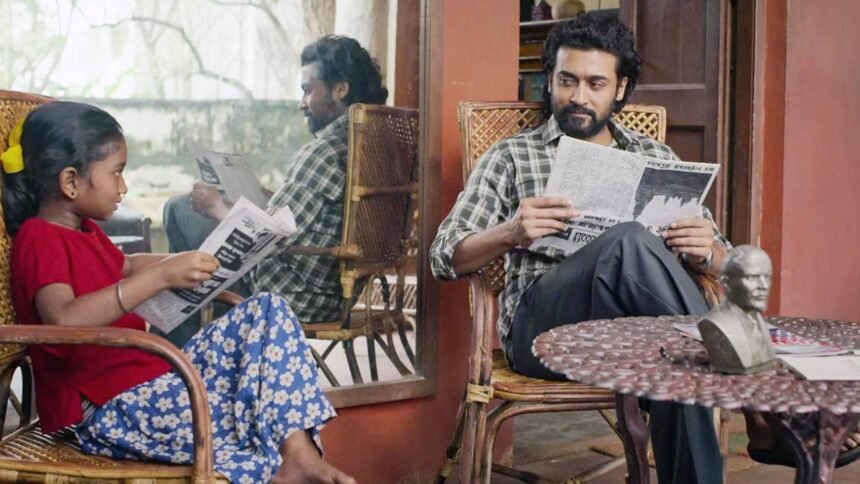
The Constitution of India isn’t just a document — it represents justice, liberty, equality and fraternity. Indian cinema has often brought these ideals to life by portraying characters who confront social injustice, defend rights, and inspire citizens to believe in democratic values.
Here are five iconic films and scenes that captured the essence of the Constitution and made audiences feel its power on screen.
1. Jai Bhim – Equality and Justice in Court
In Jai Bhim, the protagonist Chandru (played by Suriya) takes on a legal battle against systemic injustice faced by tribal communities. A pivotal courtroom scene sees him calling out lies and injustices, embodying the Constitution’s promise of “equality before the law” and the right to justice.
This moment doesn’t just tell you about justice — it makes you feel the weight of constitutional rights in action, transforming lofty ideals into a raw, emotional plea for fairness.
2. Article 15 – A Quiet Yet Powerful Act
The film Article 15 takes its name directly from the Constitution’s anti‑discrimination provision, which prohibits discrimination on the basis of caste, religion, gender or birthplace.
One unforgettable scene shows the film’s hero quietly pinning a print‑out of Article 15 on his office wall — a simple but symbolic act of commitment to institutional equality.
3. Newton – Democracy in the Field
Newton follows an honest government clerk sent to conduct elections in a conflict‑ridden area. One scene shows him setting up a polling booth in challenging conditions, urging villagers to exercise their constitutional right to vote — a powerful visual reminder that democracy isn’t just an ideal but a lived reality.
4. Mulk – Standing Up for Secularism
In Mulk, a Muslim family faces discrimination and mistrust. A key courtroom speech, delivered fiercely by Taapsee Pannu’s character, speaks to the values of equality and secularism — echoing Articles 14 and 21 of the Constitution, which protect equality before the law and the right to life and liberty.
5. Swades – The Preamble in Action
Unlike courtroom dramas, Swades demonstrates constitutional ideals through everyday action. Shah Rukh Khan’s character returns to his village and inspires people to work together on community development — from building schools to improving water supply — reflecting the Preamble’s call for collective welfare and social justice.
Cinema as a Mirror of Democratic Values
These films remind us that the spirit of the Constitution — justice, freedom, equality and dignity — isn’t confined to textbooks. Through relatable stories and memorable scenes, Indian cinema has helped audiences connect emotionally with the country’s foundational principles.