

A diplomatic storm erupted between the United States and one of its closest European allies after Poland’s parliamentary speaker refused to nominate Donald Trump for the Nobel Peace Prize. The incident has exposed the delicate balancing act Poland must perform between its European commitments and dependence on American security guarantees.
The Spark That Ignited the Controversy
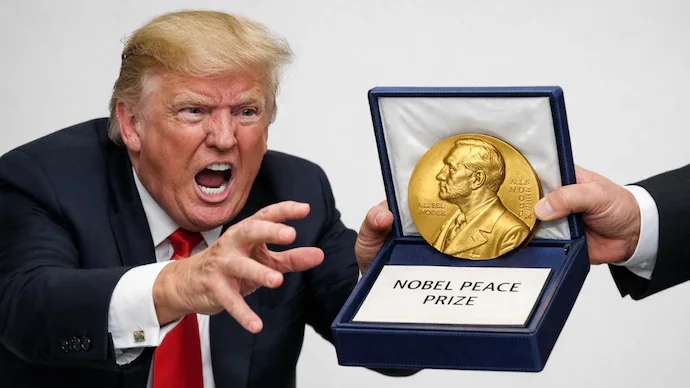
On Monday, Polish parliamentary Speaker Włodzimierz Czarzasty announced he would not support an initiative led by US House Speaker Mike Johnson and Israeli Knesset Speaker Amir Ohana to nominate President Trump for the 2026 Nobel Peace Prize based on his Middle East diplomacy efforts.
Czarzasty did not hold back in explaining his decision. Speaking at a press conference in the Polish Parliament, he stated that Trump represents power politics and pursues transactional diplomacy through force, often breaking international law. He criticized Trump’s threats to seize Greenland, impose tariffs on European allies, and what he called insufficient recognition of Polish soldiers who fought alongside American forces in military missions.
The speaker was particularly direct in his assessment. He declared that the international order based on the rule of law was eroding and that Trump simply does not deserve the Nobel Peace Prize.
Ambassador’s Unprecedented Response
US Ambassador to Poland Tom Rose responded swiftly and publicly through social media, announcing an immediate diplomatic freeze with Czarzasty. In a statement posted on X, Rose declared that the United States would have no further dealings, contacts, or communications with the parliamentary speaker.
Rose characterized Czarzasty’s remarks as outrageous and unprovoked insults directed against President Trump. He claimed the speaker had made himself a serious impediment to what he called excellent relations between the United States and Prime Minister Donald Tusk’s government.
The ambassador went further, stating that the US would not permit anyone to harm US-Polish relations or disrespect Trump, whom he described as having done so much for Poland and the Polish people. Rose specifically called Trump the greatest friend Poland has ever had in the White House.
This public blacklisting of a senior official from a NATO ally represents an unusual diplomatic move. Typically, such disagreements are handled through quiet diplomatic channels rather than public pronouncements on social media.
Prime Minister Tusk Steps In
Polish Prime Minister Donald Tusk quickly intervened, posting a carefully worded but firm rebuke to the American ambassador. Writing on X, Tusk stated that allies should respect each other, not lecture each other, adding that this is how Poland understands partnership.
The prime minister’s response walked a fine line. He needed to defend Poland’s sovereignty and his coalition partner while avoiding a full confrontation with Poland’s most important security ally. His message asserted Polish independence without directly attacking the United States or Trump.
Rose was not deterred by Tusk’s intervention. The ambassador replied with praise for Tusk himself, calling him a model ally and great friend of the United States who had shown bold leadership over decades. However, Rose insisted that Czarzasty’s comments were potentially damaging to Tusk’s government.
The ambassador then pivoted to suggest that Tusk should be directing his concerns toward Czarzasty rather than the US embassy. Rose implied that insulting and degrading Trump was the last thing any Polish leader should do.
Czarzasty Refuses to Back Down
Despite the diplomatic pressure, Speaker Czarzasty stood firm on his position. In a statement posted Thursday evening, he said he regretfully accepted Ambassador Rose’s declaration but would not change his stance on what he called fundamental issues for Polish women and men.
Czarzasty emphasized that in line with his values, he stood up for Polish soldiers fighting on missions and therefore could not support Trump’s Nobel nomination. He stressed that he consistently respects the United States as Poland’s key partner, separating criticism of Trump’s policies from Poland’s overall relationship with America.
The speaker leads Poland’s New Left party, which is part of Prime Minister Tusk’s pro-European governing coalition. His refusal to capitulate demonstrates that even in the face of American pressure, some Polish politicians are willing to maintain independent foreign policy positions.
Poland’s Impossible Position
This diplomatic incident highlights the extraordinarily difficult position Poland finds itself in under Trump’s second administration. The country depends heavily on the United States for security, particularly given the ongoing war in neighboring Ukraine and historical threats from Russia.
Since Trump returned to power, Poland has attempted to manage this challenge through a strategic division of labor. Prime Minister Tusk handles European Union matters and maintains Poland’s commitments to its western European allies. Meanwhile, President Karol Nawrocki, who was elected with support from the national-conservative Law and Justice opposition party, manages the relationship with Trump.
Nawrocki enjoys good relations with Trump, who endorsed him during last year’s presidential campaign and invited him to the White House soon after taking office. When the two presidents sat together at the White House in September, Trump declared he does not intend to withdraw US troops from Poland and suggested he might even send more if requested.
This division has allowed Poland to speak with two voices on international affairs, maintaining credibility in Europe while keeping Trump satisfied. But Czarzasty’s comments demonstrate the limits of this approach when individual politicians take principled stands that conflict with the delicate diplomatic balance.
The Nobel Prize Initiative
The campaign to nominate Trump for the Nobel Peace Prize stems from his administration’s efforts on Middle East diplomacy. House Speaker Mike Johnson and Israeli Knesset Speaker Amir Ohana have been rallying parliamentary leaders globally to support the nomination, highlighting Trump’s role in brokering agreements and reducing tensions in the region.
However, the initiative has proven controversial. Many observers note that Trump’s approach to foreign policy often involves threats, economic coercion, and unilateral actions that undermine multilateral institutions. His recent suggestions about potentially seizing Greenland, withdrawing from international agreements, and imposing broad tariffs on allies have raised concerns about respect for international law.
The Nobel Peace Prize has historically recognized individuals and organizations that work to reduce conflict through negotiation, promote human rights, or strengthen international cooperation. Critics argue that Trump’s transactional, force-based approach to diplomacy contradicts these principles, regardless of any specific achievements in the Middle East.
Domestic Polish Politics at Play
The controversy also intersects with Poland’s internal political dynamics. Earlier this week, President Nawrocki called a meeting of a national security body to discuss, among other topics, whether Poland should join Trump’s proposed Peace Council. The meeting also addressed alleged eastern business and social contacts of Speaker Czarzasty.
The speaker denies any inappropriate relationships with Russia or Belarus, but the allegations represent part of a broader political strategy. Law and Justice, the main opposition party that supported Nawrocki’s presidential bid, hopes to regain power in parliamentary elections next year. Weakening Tusk’s coalition partners, including Czarzasty’s New Left party, serves that goal.
By creating tension between Czarzasty and the United States, opposition forces may hope to fracture the governing coalition or force Tusk to choose between his left-wing coalition partner and maintaining smooth relations with Washington.
The Broader Context of Trump’s Foreign Policy
This incident is not isolated but part of a broader pattern in Trump’s second term. The administration has taken an increasingly aggressive stance toward traditional allies, demanding public displays of loyalty and support while threatening consequences for perceived disloyalty.
European leaders have expressed growing concern about being asked to subordinate their own foreign policy judgments to American preferences. The demand that parliamentary speakers globally nominate Trump for a Nobel Prize represents an unusual blurring of diplomatic protocol and personal political advancement.
Critics note that using diplomatic channels and ambassadorial authority to pressure allied officials over a prize nomination appears to prioritize Trump’s personal interests over substantive policy cooperation. It also sets a troubling precedent where diplomatic relations become contingent on supporting the US president’s personal accolades.
Historical Perspective on US-Poland Relations
Poland has been one of America’s most steadfast allies in Europe for decades. The country hosts significant US military installations and has consistently met NATO defense spending targets. Polish forces fought alongside American troops in Iraq and Afghanistan, suffering casualties in conflicts that primarily served American strategic interests.
This history makes Czarzasty’s criticism particularly pointed. When he referenced Polish soldiers fighting on missions, he was referring to real sacrifices made by Poland in support of US-led operations. His complaint that Trump insufficiently recognizes these contributions resonates with many Poles who feel their country’s loyalty has been taken for granted.
The fact that such a reliable ally now faces diplomatic punishment for one official’s honest assessment of Trump’s worthiness for a peace prize suggests a fundamental shift in how the Trump administration views alliance relationships. Rather than partnerships based on shared values and mutual interests, the model appears to be hierarchical, demanding deference to American presidential preferences.
What This Means for NATO and European Security
The timing of this dispute is particularly concerning given the security situation in Europe. With war continuing in Ukraine and ongoing Russian threats, European allies need assurance of American commitment to collective defense. Public feuds over prize nominations undermine confidence that the United States will prioritize alliance obligations over personal grievances.
European leaders are watching how Poland, one of the most pro-American governments in Europe, is being treated over a relatively minor disagreement. If even Poland faces diplomatic punishment for insufficient praise of Trump, what does that mean for other allies who may have more substantial policy disagreements?
This concern is amplified by Trump’s repeated questioning of NATO commitments, suggestions that countries should pay for American protection, and willingness to threaten withdrawal from collective defense obligations. The harsh reaction to Czarzasty’s comments reinforces European fears that American security guarantees have become conditional on personal loyalty to Trump rather than based on strategic interests.
Responses from Other Countries
Other European parliamentary leaders have taken notice of the controversy. While most have not publicly commented, diplomatic sources suggest that several are reconsidering whether to participate in the Trump Nobel nomination campaign.
The incident has also sparked discussion about the appropriate relationship between legislative bodies and executive diplomatic initiatives. In many parliamentary systems, speakers maintain independence from government foreign policy, representing their chambers rather than executing diplomatic directives.
The pressure on Czarzasty to conform raises questions about whether parliamentary leaders globally are expected to subordinate their institutional roles to advancing American presidential priorities. This tension between legislative independence and diplomatic cooperation has no easy resolution.
The State Department’s Silence
Notably, the US State Department has not commented on the dispute. When asked for a response, department officials did not immediately provide a statement. This silence is itself significant, as it suggests either bureaucratic uncertainty about how to handle an ambassador’s public blacklisting of an allied official or tacit approval of Rose’s approach.
Traditionally, the State Department would seek to de-escalate such incidents, emphasizing shared interests and finding diplomatic language to smooth over disagreements. The absence of any calming statement from Washington suggests this may be a deliberate strategy rather than an isolated incident of ambassadorial overreach.
Czarzasty’s Broader Critique
Beyond the Nobel Prize question, Czarzasty’s statement reflected deeper concerns about Trump’s approach to international relations. He specifically criticized what he called the construction of new platforms by the United States, such as the Peace Council, arguing that they undermine existing multilateral institutions.
Instead of creating new forums controlled by the United States, Czarzasty argued for strengthening the European Union, NATO, the United Nations, and the World Health Organization. This perspective reflects a fundamental disagreement about how international cooperation should be organized.
The Trump administration has shown consistent skepticism toward multilateral institutions that constrain American freedom of action. The preference for bilateral deals and new US-led initiatives allows greater American control but often comes at the expense of institutional stability and predictability.
Czarzasty’s criticism touches on this tension. From his perspective, international law and established institutions provide necessary constraints on the use of force. From Trump’s perspective, these institutions often prevent necessary action and tie American hands.
What Happens Next
The immediate question is whether this diplomatic freeze will hold or whether quieter channels will find a resolution. Ambassador Rose’s statement suggested the break in communication is permanent, at least while Czarzasty remains speaker. However, practical cooperation on security, economic, and other matters may require some level of contact.
Prime Minister Tusk faces difficult choices. He could pressure Czarzasty to apologize or soften his stance, but that would undermine both the speaker’s credibility and the coalition’s independence. He could defend Czarzasty more forcefully, but that risks escalating tensions with Washington at a dangerous time for European security.
President Nawrocki, who maintains good relations with Trump, may try to serve as a bridge. However, his own political interests lie in weakening Tusk’s coalition, so he has limited incentive to resolve the situation smoothly.
Implications for Democratic Governance
This incident raises broader questions about the relationship between democratic governance and alliance diplomacy. Should parliamentary leaders in allied countries feel free to express honest assessments of American policies and leadership, or does alliance membership require public support for US presidential initiatives?
Democratic systems depend on the ability of elected representatives to speak freely on behalf of their constituents. If alliance relationships require that officials suppress honest opinions to avoid diplomatic punishment, it creates a tension between democratic accountability and international obligations.
The United States has traditionally championed democratic values and free speech globally. The harsh reaction to Czarzasty’s constitutionally protected expression of his views creates dissonance between American stated values and diplomatic practice.
A Test Case for Alliance Politics
How this situation resolves may set precedents for how other allies handle similar pressures. If Poland eventually capitulates and Czarzasty is forced to walk back his comments or lose his position, it will send a message that criticizing Trump carries unacceptable costs even for senior officials in sovereign allied nations.
If Poland successfully maintains its position without serious consequences to the broader relationship, it may encourage other allies to assert more independence in their assessments of American leadership and policy.
The outcome will likely depend on calculations about what the Trump administration truly prioritizes. If maintaining effective security cooperation with Poland matters more than demanding public deference to Trump, pragmatism may prevail. If the administration believes alliance discipline requires punishment for perceived disrespect, the confrontation may escalate.
The Long View
Twenty years from now, historians examining Trump’s second term will likely view incidents like this as revealing fundamental tensions in how the administration conceived of alliance relationships. The question is whether allies are partners with whom the United States consults and occasionally disagrees, or subordinates expected to support American initiatives regardless of their own assessments.
Poland’s situation is particularly instructive because the country has been so consistently pro-American. If even Poland faces diplomatic punishment over a Nobel Prize nomination, it suggests that no ally can safely maintain independence on even relatively minor matters.
This has implications beyond any single incident. It affects how allies make defense decisions, conduct their own foreign policies, and calculate the reliability of American commitments. An alliance system based primarily on fear of punishment rather than shared interests and values is inherently less stable and effective.
For Poland, caught between its European identity and its dependence on American security guarantees, this diplomatic row represents the kind of impossible choice the country hoped to avoid. Speaker Czarzasty’s refusal to back down may prove costly, but it also represents an assertion that even close allies retain the right to independent judgment.
How the United States and Poland navigate this dispute will say much about the future of the transatlantic alliance in an era of more transactional and personalized American foreign policy.