


Washington, D.C. / Dhaka: The United States and Bangladesh have reached a new bilateral trade agreement under which Washington has reduced its reciprocal tariff on Bangladeshi exports to the U.S. from 20 % to 19 % — a modest but symbolically significant step aimed at strengthening economic relations between the two nations.
Key Provisions of the Agreement
- The tariff on most Bangladeshi goods entering the U.S. market will now be 19 %, down from 20 % agreed last year, and far lower than previously proposed rates of up to 37 % under earlier U.S. tariff policies.
- The deal establishes a **mechanism to allow certain textile and apparel products from Bangladesh to enter the U.S. at zero tariff **provided these garments are manufactured using U.S.-produced cotton or man-made fibres.
- Dhaka has also agreed to provide greater market access for selected U.S. industrial and agricultural goods, including soybeans, corn, and aircraft, as part of the reciprocal trade framework.
Negotiations and Signatories
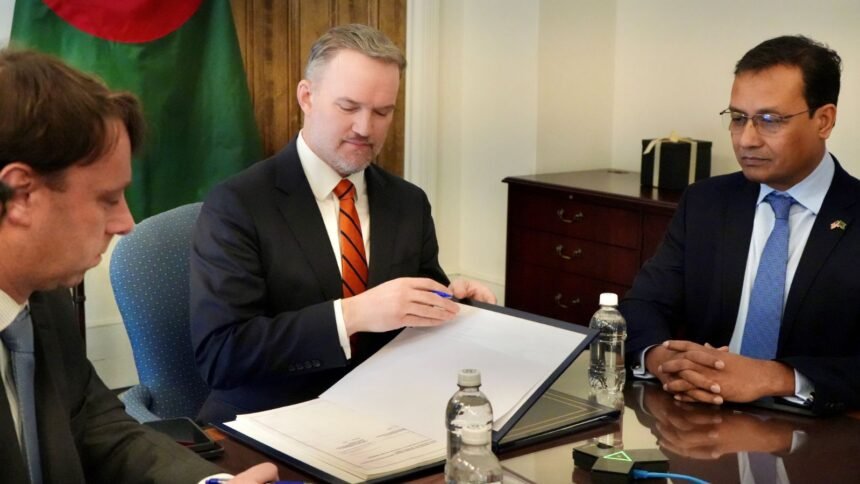
The Agreement on Reciprocal Trade was signed following nine months of negotiations. Bangladesh’s side was led by Commerce Adviser Sheikh Bashir Uddin and National Security Adviser Khalilur Rahman, while the U.S. was represented by Ambassador and U.S. Trade Representative Jamieson Greer.
According to officials, the pact represents a new milestone in bilateral economic cooperation, granting Bangladeshi exporters modestly improved access to the U.S. market, especially for the garment sector which accounts for the lion’s share of the country’s export earnings.
Economic and Political Context
Bangladesh’s garment industry — a major contributor to its GDP and employment — stands to benefit from tariff reductions and duty-free provisions on certain U.S.-linked materials.
However, the deal’s tariff outcomes have sparked criticism in neighboring India, where some opposition leaders argue that the zero-duty textile provisions offered to Bangladeshi exports could widen the competitiveness gap for Indian exporters, especially given recent India-U.S. trade negotiations that set tariff rates for Indian goods at about 18 %.
Looking Ahead
The agreement — now awaiting final procedural notifications from both governments — is expected to reshape trade relations in the region, balancing reciprocal market access with strategic economic diplomacy.