


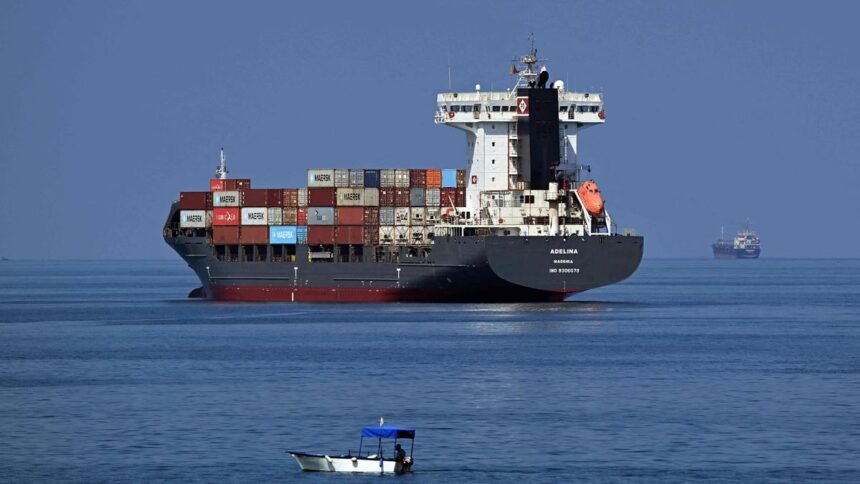
New Delhi, India – In a compelling opinion piece, former Permanent Representative of India to the United Nations, Syed Akbaruddin, argues that India’s foreign policy must urgently “look seaward” to address the growing vulnerabilities of its vast seafaring workforce. With over 3.2 lakh Indian seafarers—second only to the Philippines globally—the nation’s consular and maritime frameworks are ill-equipped to handle the complexities of a profession where nationality is clear, but responsibility is often fragmented across flags, jurisdictions, and corporate structures.
Akbaruddin highlights the stark reality: an Indian seafarer recruited in Mumbai, hired by a Singapore-based company, on a Panamanian-flagged ship carrying Kuwaiti oil, attacked off Oman, and detained in a fifth country, faces a bureaucratic labyrinth. “No single authority is fully in charge,” he writes. This uncertainty has become deadly, with at least eight of the 14 Indians killed in West Asia-related attacks since February being seafarers. The government’s recent ‘Seafarer First’ response, which includes a dashboard to track ships and crew in the region, is a step forward, but Akbaruddin argues it is not enough.
The op-ed points to alarming statistics: 1,125 Indian seafarers were abandoned in 2025, the highest globally. In such cases, responsibility ricochets among the flag State, port authority, owner, insurer, and Indian missions. Akbaruddin calls for a standing maritime consular protocol that specifies who takes charge from the moment a distress signal is received. He urges the establishment of designated officers in major shipping centers who know local port authorities, hospitals, insurers, and lawyers, stressing that “such relationships cannot be improvised after a ship is hit.”
Akbaruddin also advocates for a proactive diplomatic push. He suggests India, along with the Philippines and Indonesia, collectively push for common standards on repatriation, detention, and deployment in conflict zones through the International Maritime Organization and the International Labour Organization. “Otherwise, an owner constrained by one country’s rules can simply hire elsewhere,” he warns. He also emphasizes the right of seafarers to know a vessel’s true ownership, sanctions status, and insurance validity before signing a contract, and the right to refuse deployment to designated high-risk zones without penalty.
Ultimately, Akbaruddin argues that India’s maritime ambitions—measured in ports, naval deployments, and tonnage—must be matched by a commitment to its seafarers’ safety. “The flag above the vessel may be foreign. India’s responsibility to its nationals is not,” he concludes, making a powerful case for a foreign policy that places the protection of its citizens at sea at its core.