


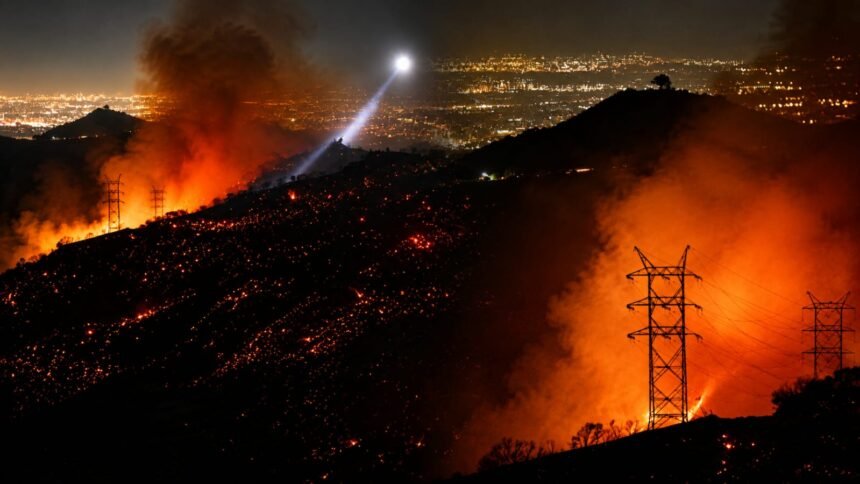
Paris/Madrid | July 26: Europe is grappling with one of its most destructive wildfire emergencies in decades as raging fires continue to spread across France and Spain, forcing the evacuation of more than 300,000 people. Authorities have intensified emergency operations after an additional 55,000 residents were evacuated overnight in southwestern France, where advancing flames continue to threaten communities near Bordeaux.
Fuelled by record-breaking temperatures, prolonged drought, dry vegetation, and strong winds, the wildfires have stretched emergency services to their limits and prompted large-scale national and international response efforts. Firefighters remain engaged in an around-the-clock battle to prevent the flames from spreading further as weather conditions continue to favour rapid fire growth.
Thousands Evacuated as Fires Continue to Spread
French authorities confirmed that more than 220,000 people have now been evacuated from affected regions, with the latest evacuation orders issued as fires moved dangerously close to residential areas south of Bordeaux. In neighbouring Spain, over 75,000 residents have been forced to leave their homes, while thousands more have been advised to shelter indoors due to hazardous smoke and deteriorating air quality.
More than 2,500 firefighters, supported by military personnel, helicopters, water-bombing aircraft, and emergency response teams from across Europe, have been deployed to contain the fires. Assistance from neighbouring countries has been coordinated through the European Union’s Civil Protection Mechanism, providing additional aircraft, equipment, and firefighting personnel.
France Faces One of Its Worst Wildfire Seasons
French officials have described the current crisis as one of the country’s worst wildfire emergencies in modern history. More than 42,000 hectares of forest, farmland, and grassland have already been destroyed in the Gironde region alone, with fires continuing to spread through densely wooded areas.
Several villages have suffered extensive property damage, forcing authorities to close roads and suspend transportation services in affected regions. Emergency shelters have been established, including a major evacuation centre in Bordeaux, where displaced residents are receiving food, accommodation, medical assistance, and essential supplies.
Environmental experts have warned that the fires are causing severe damage to wildlife habitats, biodiversity, and agricultural land, with long-term ecological consequences expected across the region.
Spain Declares National Wildfire Emergency
Spain continues to battle multiple large wildfires across central and western parts of the country, prompting authorities to declare the country’s first national wildfire emergency. Firefighters have worked continuously under extreme conditions to protect residential communities and critical infrastructure as unpredictable winds repeatedly changed the direction of the flames.
Emergency officials have urged residents to comply immediately with evacuation orders and avoid travelling to affected regions unless absolutely necessary. Several roads remain closed, while emergency crews continue monitoring hotspots to prevent fresh outbreaks.
Smoke Creates Growing Health Concerns
The thick smoke generated by the wildfires has significantly reduced air quality across several cities in both France and Spain, including Madrid. Health authorities have advised children, elderly residents, pregnant women, and individuals with respiratory or heart conditions to remain indoors and wear protective masks when outside.
Hospitals have been placed on alert in preparation for an increase in patients experiencing breathing difficulties and smoke-related illnesses as air pollution levels continue to rise.
European Union Mobilises Emergency Support
European leaders have expressed solidarity with affected communities as France and Spain coordinate emergency response operations. Governments in both countries have held emergency meetings to assess the evolving situation and allocate additional resources for firefighting efforts.
The European Union has activated its emergency support systems, deploying specialised firefighting aircraft, satellite monitoring services, and emergency response teams to assist local authorities. Several neighbouring countries have also contributed personnel and equipment to help contain the rapidly spreading fires.
Climate Change Driving More Extreme Wildfires
Climate scientists say the worsening wildfire seasons across southern Europe are closely linked to climate change. Rising global temperatures, increasingly frequent heatwaves, prolonged droughts, and changing weather patterns have created conditions that allow wildfires to ignite more easily and spread at unprecedented speeds.
Experts continue to call for stronger forest management practices, improved disaster preparedness, and greater international efforts to reduce greenhouse gas emissions in order to minimise future wildfire risks.
Relief Efforts Continue as Communities Recover
Despite the widespread devastation, many popular tourist destinations remain open, although authorities have urged travellers to monitor official advisories before beginning their journeys. Local governments continue to establish relief centres providing temporary shelter, clean drinking water, food, medical care, and psychological support for displaced families.
Firefighters, rescue workers, volunteers, healthcare professionals, and emergency responders have received widespread praise for their tireless efforts to protect lives and property during the ongoing disaster.
As firefighting operations continue across the weekend, officials remain hopeful that cooler temperatures and improved weather conditions will help slow the spread of the fires. However, authorities have warned that the danger remains high and urged residents to stay alert until all evacuation orders are lifted.
The unfolding wildfire crisis stands as another stark reminder of the increasing impact of climate change across Europe and highlights the urgent need for stronger international cooperation in responding to extreme weather disasters.
By Manshwi Sharma
Also read – France Wildfire 2026: Over 200,000 Evacuated as Massive Blaze Ravages Southern France