


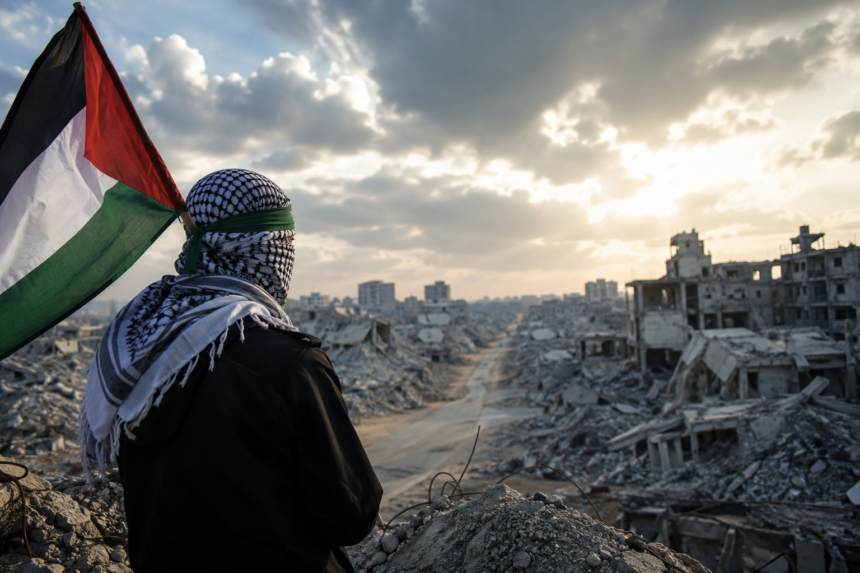
AI-generated illustration representing the ongoing Gaza peace negotiations and humanitarian situation.
Jerusalem/Gaza, August 1, 2026: Diplomatic efforts to end the Gaza conflict continued on Saturday after Hamas clarified that it will only implement the proposed Gaza peace framework once Israel fulfills its commitments under the agreement. While the latest proposal has renewed hopes for a ceasefire, both sides remain divided over the sequence of disarmament and military withdrawal.
Hamas Links Implementation to Israeli Withdrawal
A senior Hamas official said the group is prepared to place its weapons under the supervision of the proposed National Committee for the Administration of Gaza (NCAG) as part of the peace framework. However, Hamas stressed that no steps toward disarmament would be taken until Israel halts military operations, withdraws its forces from Gaza, and fulfills the agreed terms of the proposed roadmap.
Israeli officials, meanwhile, continue to insist that Hamas must first fully disarm before any permanent ceasefire or military withdrawal can proceed. This disagreement remains the primary obstacle to reaching a final agreement.
Peace Proposal Outlines Transitional Administration
According to officials involved in the negotiations, the proposed agreement envisions the establishment of the National Committee for the Administration of Gaza (NCAG), which would oversee civilian governance, humanitarian assistance, reconstruction efforts and the restoration of essential public services.
The framework also outlines a phased process under international monitoring, with reconstruction and security measures linked to progress made by both sides.
International Mediators Continue Intensive Talks
Regional mediators and international partners are continuing diplomatic discussions to bridge differences between Hamas and Israel. Negotiators are working to establish a roadmap that addresses Israel’s security concerns while improving humanitarian conditions for civilians in Gaza.
Despite the diplomatic progress, violence has continued in parts of Gaza, highlighting the fragile nature of the negotiations and the challenges facing any future agreement.
Humanitarian Situation Remains Critical
The humanitarian crisis in Gaza continues to worsen, with thousands of families still requiring food, clean water, shelter and medical assistance. International humanitarian organizations have repeatedly called for uninterrupted aid access and greater protection for civilians affected by the conflict.
Security experts caution that even if a political agreement is reached, implementation will require extensive international monitoring, coordination among multiple governments and long-term financial support for rebuilding homes, hospitals, schools and critical infrastructure.
Analysts Urge Cautious Optimism
Political analysts have welcomed the renewed diplomatic momentum but warn that previous ceasefire initiatives have collapsed because of disagreements over security arrangements, governance and implementation timelines. They say sustained commitment from both parties will be essential if the current proposal is to succeed.
The United Nations and several world leaders have continued to urge all parties to prioritize civilian safety, expand humanitarian assistance and pursue negotiations through peaceful dialogue.
Although major differences remain unresolved, the latest developments represent one of the most significant diplomatic openings in recent months. The coming days are expected to determine whether negotiators can transform the proposed framework into a formal agreement capable of reducing violence and beginning Gaza’s long-term recovery.
Key Highlights
- Hamas says it will implement the proposed peace framework only after Israel fulfills its commitments.
- The group links any weapons transfer to a complete Israeli military withdrawal from Gaza.Israel continues to insist that Hamas must disarm before a permanent ceasefire.
- The proposed framework includes a transitional National Committee for the Administration of Gaza (NCAG).
- International mediators continue negotiations while humanitarian agencies call for increased aid access and civilian protection.
-By Manshwi Sharma
Also read – Middle East Tensions Continue as Fresh Strikes and Diplomatic Efforts Persist