


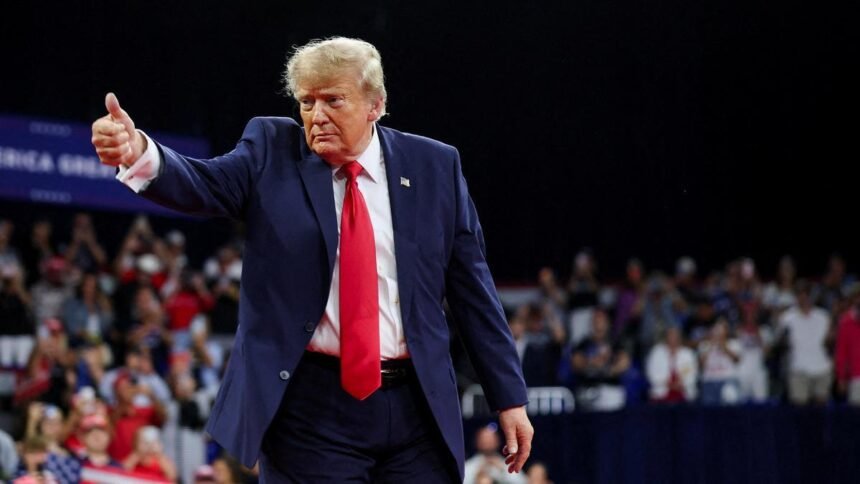
Washington: Every four years, halfway through a sitting president’s four-year term, the U.S. holds a nationwide poll known as the midterm elections. Although the White House occupant is not directly up for re-election, the outcome serves as a de facto referendum on the current administration’s leadership and political agenda.
The November 3 vote determines control of Congress, with all 435 House seats, about one-third of the 100 Senate seats, and numerous state governorships up for grabs.
The Structure
The legislative branch, the U.S. Congress, is entirely at stake, as voters elect representatives to all 435 seats in the House of Representatives, who serve two-year terms.
At the same time, 35 of the 100 Senate seats — which carry six-year terms — are up for grabs (33 regular elections and two special elections in Florida and Ohio), alongside state gubernatorial seats.
Unlike centralised electoral systems, American voting, ballot printing and counting are all decentralised, operating independently by local authorities and state governments across thousands of individual counties.
Why Control of Capitol Hill Matters
The structure of U.S. government depends on a system of checks and balances spread across the executive, legislative and judicial branches. When the President’s party retains control of both the House and Senate, passing legislation and funding executive projects becomes relatively easier. If the opposing party gains a majority in even one chamber, it creates a divided government that can interfere with the executive agenda.
These midterms therefore dictate whether a President spends their remaining two years advancing major policy initiatives or defending their administration against congressional pushback.
The Numbers Going In
Republicans defend a narrow majority, while Democrats need a net gain of just a few seats to retake the House. Currently, Republicans hold a 218-214 majority in the House, with two vacancies and one independent who caucuses with them. Democrats are also striving to gain control of the Senate, where Republicans maintain a 53-47 majority.
Key Races
| Race | Dynamics |
|---|---|
| Mike Lawler (R) vs. Cait Conley (D) | Lawler represents a district won by Democrats in 2024, making this one of the most vulnerable seats |
| Gabe Evans (R) vs. Manny Rutinel (D) | High-stakes race with a 40% Hispanic electorate |
| Vicente Gonzalez (D) vs. Eric Flores (R) | Key battleground following state redistricting wars |
| Max Miller (R) vs. Brian Poindexter (D) | Once safe seat now seen as a toss-up following internal party conflicts and high Democratic fundraising |
| Key swing districts | Retirements and narrow margins at play |
State gubernatorial races in key states such as California, Texas and Florida are also critical, as winning governors will be in office during the 2028 presidential elections.
What It Means for India
The effects of U.S. midterm outcomes extend beyond its borders, influencing foreign policy, diplomatic relations and global trade. For India and other strategic partners, a shift in congressional leadership can change the direction of critical legislative decisions including federal defence spending, regional security initiatives in the Indo-Pacific and high-tech transfers.
These midterms arrive during a delicate phase in India-U.S. bilateral relations, with an unratified interim trade framework and newly passed legislation threatening up to 100% tariffs on major purchasers of Russian energy.
Moreover, with Indian nationals facing curbs on labour certification and visa extension policies, the upcoming congressional control can directly affect the course of such policies, alongside international trade, tariffs and immigration rules.
How Voting Works
Millions of citizens cast ballots before election day through early in-person voting or postal mail-in ballots, with more than 100 million people likely to vote in this year’s midterms. Because mail-in processing guidelines and counting rules vary from state to state, final results can take several days to tabulate completely.
The Mood
Approval of President Trump’s performance has reached an all-time low of 32%, according to a September Reuters/Ipsos poll. Domestic issues such as rising consumer prices are likely to affect the outcomes of many races and may weaken support for Republicans.
A Reuters report also suggests Democrats are more enthusiastic about voting this year compared with Republicans. If early voting trends persist, it could indicate a Democratic victory in November, the report added.