


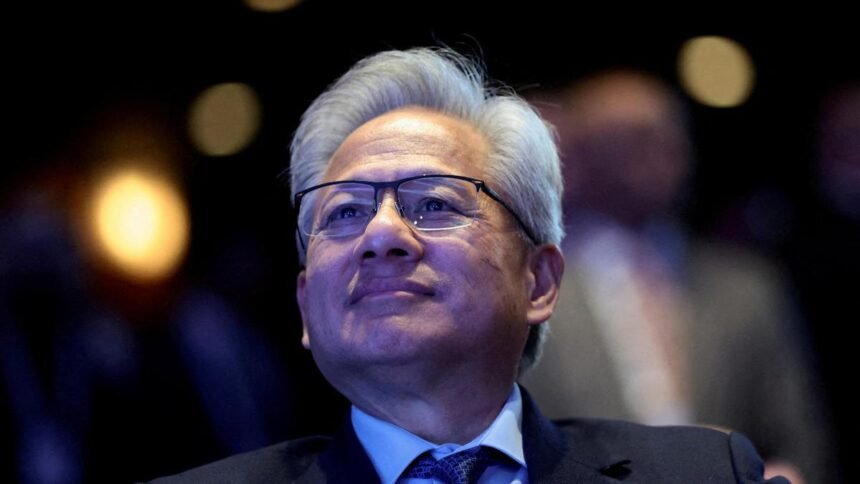
Within two weeks, Jensen Huang, Nvidia’s co-founder, went from being an AI rainmaker — whose chips and business ingenuity kick-started the AI revolution — to a sex-and-spy scandal-hit CEO who quit the company he built from scratch and helmed for over three decades, and then returned as its boss once again after a band of tech billionaires intensely lobbied the Trump administration for his reinstatement.
Returning to Nvidia’s Santa Clara headquarters in California on Monday (November 23, 2026), and standing on the ground floor of the atrium, Mr. Huang apologised to employees and vowed to be a better CEO as staff cheered to see their chief back, whose exit had wiped out close to a quarter of the company’s market value. Mr. Huang’s return buoyed the market as Nvidia’s stock soared, adding nearly a trillion dollars in market value the day he was back at Nvidia.
The rapid reversal leaves the 63-year-old, who has run Nvidia since he co-founded it in 1993, facing a very different set of challenges from the ones that defined his first three decades at the helm. Much of the piece’s argument centres on whether the playbook that built Nvidia into the world’s most valuable chipmaker — relentless iteration on GPU architecture, deep software lock-in through CUDA, and a willingness to bet early on nascent computing markets — is the same one that can carry the company through a period in which its chief executive’s credibility has been publicly damaged. Analysts quoted in the report note that while Nvidia’s technical roadmap remains intact, the company’s customers, partners and investors will now be asking questions about governance, succession planning and the concentration of decision-making in a single figure that they did not ask two weeks earlier.
The scandal itself has not been fully resolved. Reports of multiple affairs, including one with a woman alleged to have been a suspected Chinese spy, and alleged relationships with at least two Nvidia employees, have prompted questions from lawmakers in Washington about the company’s handling of potential national security concerns — questions that the board’s unanimous reinstatement decision has not answered. Senate Minority Leader Chuck Schumer has said Democrats will investigate the reinstatement, accusing the administration of putting financial interests ahead of national security. Nvidia has said it will continue its internal investigation into compliance with US export controls.
For Huang, the immediate task is to rebuild internal confidence. His apology to employees at Santa Clara was framed as a personal commitment rather than a corporate statement, and the article suggests the distinction matters: the company’s future now depends less on whether its next generation of chips outperforms rivals than on whether its chief executive can persuade employees, customers and regulators that the last two weeks were an aberration rather than a revelation.