

Bangladesh is witnessing a historic political moment as voters participate in the first general election since the exit of former Prime Minister Sheikh Hasina. Alongside the parliamentary polls, a nationwide referendum on key constitutional reforms is also being held — making this one of the most consequential electoral exercises in the country’s recent history.
Why Is This Election Historic?
This is the first national election following the end of Sheikh Hasina’s long tenure in power. Her party, the Awami League, is not contesting the polls, marking a dramatic shift in Bangladesh’s political landscape. The vote is widely seen as a test of democratic stability after months of political unrest and transition.
With over 100 million eligible voters, the outcome is expected to reshape governance, foreign policy direction, and institutional balance in the country.
What Is the Referendum About?
For the first time, a constitutional referendum is being conducted alongside a general election. Voters are being asked to approve or reject a set of proposed reforms, including:
- Introducing term limits for the Prime Minister
- Strengthening judicial independence
- Creating new oversight and accountability institutions
- Reforming electoral and governance frameworks
If approved, a constitutional reform council will be tasked with implementing the changes within a defined time frame.
Who Are the Main Political Players?
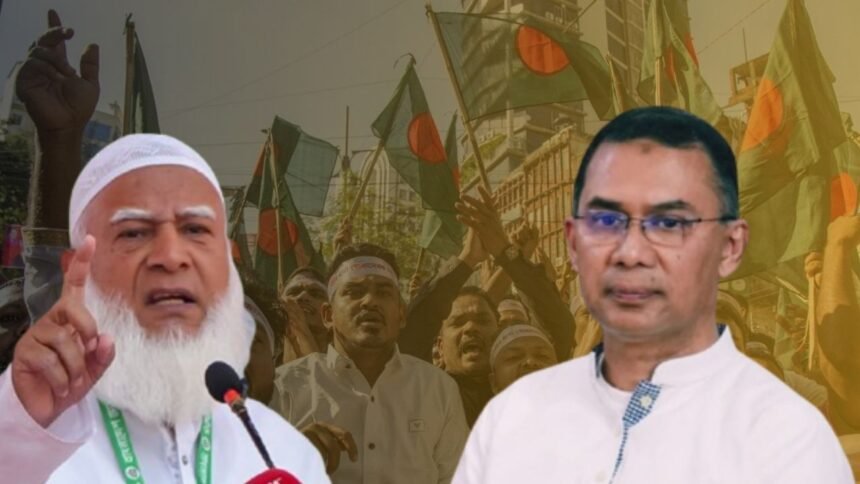
- Bangladesh Nationalist Party (BNP): Emerging as a key contender in the post-Hasina era, with Tarique Rahman playing a central leadership role. The party has focused on governance reforms, economic revival, and institutional restructuring.
- Jamaat-e-Islami and allied groups: Seeking to expand influence amid shifting political equations. Their role has drawn both support and criticism, especially concerning minority rights and secular policies.
The absence of the Awami League has significantly altered traditional electoral dynamics.
Key Issues in Focus
Several pressing concerns dominate voter sentiment:
- Employment and economic recovery
- Governance transparency
- Youth participation in politics
- Civil liberties and democratic freedoms
- Minority protection and social stability
Young voters, especially Gen Z, are playing a crucial role in shaping the discourse.
What’s at Stake?
The combined election and referendum could redefine Bangladesh’s political framework. The results may determine not only the next government but also the future structure of constitutional power, democratic checks and balances, and the country’s global positioning.
Observers describe this as a pivotal moment — one that could either deepen democratic reforms or usher in a new phase of political uncertainty.