


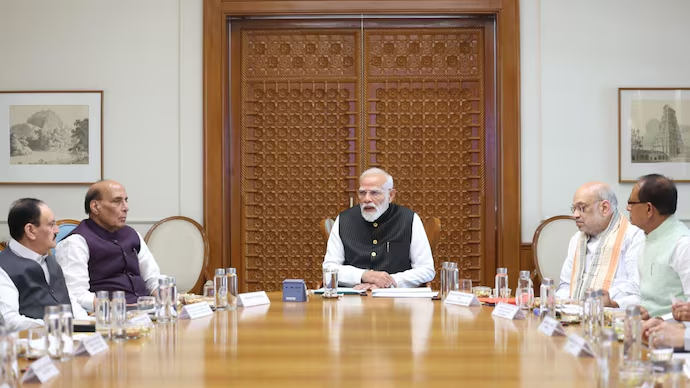
NEW DELHI: Prime Minister Narendra Modi on Sunday chaired a high-level meeting of the Cabinet Committee on Security (CCS) to review India’s preparedness amid the ongoing West Asia conflict, with a focus on ensuring uninterrupted supply of fuel, fertilisers, and essential commodities.
The meeting, attended by senior ministers including Amit Shah, Rajnath Singh, JP Nadda, S. Jaishankar, Hardeep Singh Puri, and Nirmala Sitharaman, assessed the short, medium, and long-term implications of the crisis on India’s economy and security.
Key Takeaways from the Meeting
| Aspect | Key Decisions/Updates |
|---|---|
| Fuel & Energy | 50-day fuel stock available; no electricity shortage. Coal stock at power plants reviewed and adequate. |
| Fertilisers | Existing stocks sufficient for upcoming Kharif season; alternate sourcing strategies discussed. |
| Import Diversification | Plans to diversify sources for crude, gas, chemicals, and petrochemicals to reduce dependency risks. |
| Export Promotion | New export destinations to be developed for Indian goods. |
| LPG & Hoarding | Commercial LPG allocation increased for hospitals/educational institutions; raids to curb hoarding and black marketing. |
| Shipping | All 22 Indian ships and 611 sailors in Persian Gulf reported safe. Port operations normal; cargo charges waived at New Mangalore Port for crude and LPG. |
| Coordination | “Whole-of-government” approach with sector-specific groups; coordination with states to prevent hoarding. |
PM Modi’s Statement
In a post on X after the meeting, PM Modi wrote:
“Chaired a meeting of the CCS to review the mitigating measures in the wake of the ongoing conflict in West Asia. We had extensive discussions on short, medium and long term measures, including ensuring continued availability of fertilisers for farmers, diversifying import sources for key sectors, promoting exports to new destinations and more. We are committed to safeguarding our citizens from the impact of the conflict.”
The Context: West Asia Conflict
The review comes as the West Asia conflict enters its fourth week. The crisis escalated following the killing of Iran’s Supreme Leader, Ayatollah Ali Khamenei, in US-Israeli strikes on February 28, followed by retaliatory actions by Iran targeting US and Israeli assets across the Gulf region.
Key impacts on India:
- Industrial diesel prices have risen by 25% (from Rs 87.67 to Rs 109.59 per litre).
- Trade routes through the Strait of Hormuz (carrying 20% of global oil) remain disrupted.
- India has been securing alternative supply lines and diversifying import sources.
Immediate Steps Announced
| Measure | Details |
|---|---|
| LPG Allocation | Commercial LPG supply to states increased; priority for hospitals and educational institutions. |
| New PNG Connections | States advised to facilitate new connections. |
| Anti-Hoarding Raids | Authorities conducting raids across states and UTs to curb LPG hoarding and black marketing. |
| Port Charges Waived | Cargo-related charges for crude oil and LPG waived at New Mangalore Port (March 14-31). |
Assurance to Citizens
The government reiterated that existing stocks of essential commodities are sufficient to meet demand. Officials confirmed that:
- There will be no electricity shortage.
- Fertiliser availability for farmers is assured for the upcoming Kharif season.
- Port operations remain normal with no congestion.
Prime Minister Modi directed that a group of ministers and secretaries be formed to adopt a “whole-of-government” approach, with sector-specific groups working in consultation with stakeholders.