

The United States has significantly increased its military presence in the Middle East by deploying over 50 fighter jets — including advanced F-22 Raptors, F-35 Lightning IIs and F-16 Fighting Falcons — to the region in the past 24 hours even as indirect nuclear talks with Iran continue in Geneva, according to multiple international reports.
Independent flight-tracking data and military aviation monitors recorded multiple deployments of these fighter aircraft along with several aerial refuelling tankers headed toward strategic areas in and around the Middle East. U.S. officials described the movement as a major reinforcement of both air and naval assets, indicating preparation for sustained operations.
Military Buildup During Diplomacy
The deployment comes at a time when American and Iranian officials are engaged in indirect nuclear negotiations in Geneva, aiming to resume discussions on Tehran’s nuclear programme and potential sanctions relief. Iranian officials have described the talks as “serious and constructive,” though both sides acknowledge that significant details remain unresolved.
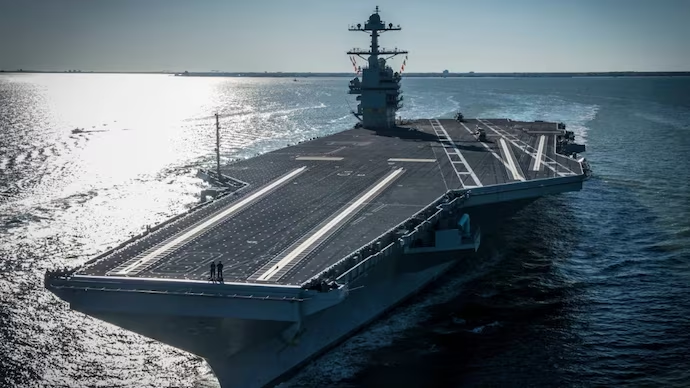
Alongside the fighter jet deployment, the USS Gerald R. Ford aircraft carrier strike group has also been moved toward the region, further amplifying U.S. military capability within striking distance of key strategic locations. The strike group departed from the Caribbean and is expected to reach Middle Eastern waters in the coming days.
Strategic Implications
Analysts suggest that the rapid deployment of high-end aircraft such as the F-22, F-35 and F-16 signals a dual approach by Washington — pursuing diplomacy while preparing for a range of contingencies should talks falter. The enhanced posture may serve as both a deterrent and a negotiating lever, conveying resolve to protect U.S. interests and allies in the region.
Despite this show of force, U.S. and Iranian voices have maintained cautious optimism about diplomatic progress, with Iran’s foreign officials indicating a commitment to returning to Geneva with more detailed proposals in the coming weeks.
The simultaneous escalation of military readiness and diplomatic engagement highlights the complex balance between exerting pressure and preventing outright conflict as global powers navigate one of the most sensitive security challenges in the Middle East.