


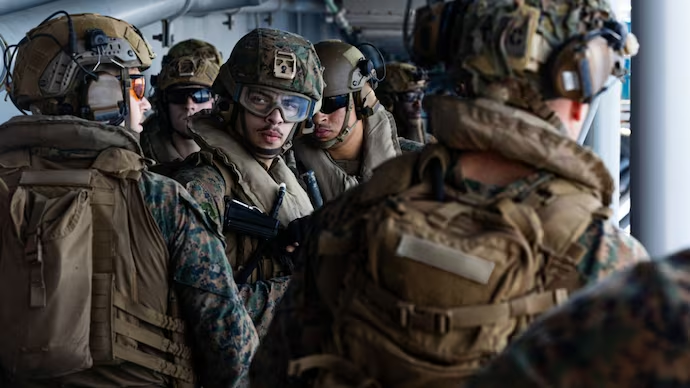
The United States has significantly increased its military presence in the Middle East, deploying more than 3,500 troops as the conflict involving Iran intensifies. Among the key assets is the USS Tripoli, carrying approximately 2,500 Marines, which has now reached its designated operational zone, according to the U.S. Central Command.
The deployment marks a major escalation in the ongoing war, which began on February 28 with the launch of Operation Epic Fury.
The Deployment: USS Tripoli and Additional Reinforcements
| Asset | Details |
|---|---|
| USS Tripoli | Modern “big deck” amphibious assault ship; capable of operating F-35 stealth fighter jets and Ospreys |
| Marines Aboard | Approximately 2,500 |
| Previous Station | Japan |
| Additional Reinforcements | USS Boxer and other naval units from San Diego en route |
The USS Tripoli, a modern “big deck” amphibious assault ship capable of operating advanced aircraft such as F-35 stealth fighter jets and Ospreys, was previously stationed in Japan before receiving deployment orders nearly two weeks ago. Additional reinforcements, including the USS Boxer and other naval units from San Diego, are also being sent to the region.
Scale of Operations
According to Central Command, over 11,000 targets have been struck since the launch of Operation Epic Fury on February 28, underscoring the scale of ongoing military operations.
US Official Statement
U.S. Secretary of State Marco Rubio stated that Washington aims to achieve its objectives without deploying ground troops, while emphasizing that President Donald Trump must remain prepared for evolving scenarios.
Escalating Regional Threats
Tensions have escalated further with new developments:
| Threat | Details |
|---|---|
| Iranian Attacks | Ballistic missiles and drones targeted Saudi Arabia’s Prince Sultan Air Base, injuring at least 10 U.S. personnel. |
| Strait of Hormuz | Iran continues to exert control over the strategic waterway, severely disrupting global oil shipments. |
| Houthi Involvement | Yemen’s Iran-backed Houthis claimed responsibility for a missile launch toward Israel, raising concerns over the Bab el-Mandeb Strait. |
The conflict has already disrupted international shipping lanes and aviation routes, with countries scrambling for alternatives as the Strait of Hormuz remains effectively closed.
Diplomatic Stalemate
Diplomatic efforts remain stalled. The U.S., through envoy Steve Witkoff, proposed a ceasefire framework aimed at curbing Iran’s nuclear program and reopening key waterways. However, Tehran has rejected the proposal, countering with its own demands, including reparations and recognition of its sovereignty.
What Analysts Warn
Analysts warn that further Houthi attacks on commercial vessels could destabilize maritime security and push global energy prices even higher. With the conflict showing no signs of de-escalation and new actors entering the fray, the risk of broader regional instability continues to rise.