


New Delhi, India – At least 111 sitting MPs and MLAs changed political parties after being elected, according to a new analysis by the Association for Democratic Reforms (ADR) and National Election Watch. The study covers elections and by-elections held between 2022 and 2026 and includes 26 Lok Sabha MPs, seven Rajya Sabha MPs, and 78 MLAs. Of these 111 lawmakers, 29, which is 26%, moved to the BJP, making it the second-largest recipient of lawmakers who changed parties.
The Naga People’s Front received the most, with 32 lawmakers, or 29% of the total. However, that was the result of a merger in 2025 and not of individual MLAs switching sides. The report, released on September 24, shows that switching of parties occurred across 17 states and Union Territories. At 32, Nagaland accounted for the largest number, followed by West Bengal with 20, Telangana with nine, and Goa and Punjab with eight each.
Importantly, the 111 cases were not all simple defections. ADR also counted party mergers, lawmakers who resigned and switched parties before winning by-elections, and those who were disqualified and later won on another party’s ticket. ADR said the list might not cover every case because of the “lack of systematically maintained and readily accessible official Election Commission of India data.”
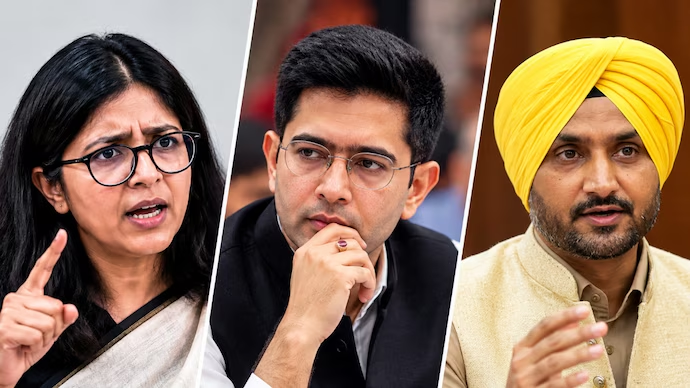
Of the 29 lawmakers ADR lists as having joined the BJP, seven were Rajya Sabha MPs and 22 were MLAs. The seven Rajya Sabha members had been elected from the Aam Aadmi Party—Swati Maliwal, Ashok Mittal, Harbhajan Singh, Raghav Chadha, Sandeep Kumar Pathak, Vikramjit Singh Sahney, and Rajinder Gupta. Among the MLAs were eight Congress legislators from Goa, four from Gujarat, and two from Himachal Pradesh, along with five JD(U) MLAs from Manipur.
After the NPF’s 32 and BJP’s 29, the Nationalist Citizens Party of India received 20 lawmakers, or 18%. After the Trinamool Congress lost power in the 2026 West Bengal Assembly election, 20 of its Lok Sabha MPs rebelled and announced their merger with the little-known NCPI. On the other side of the ledger, the largest group came from the NDPP with 25 lawmakers, followed by the Trinamool Congress with 20 and the Congress with 19. Together, these three accounted for 64 of the 111 cases, or 58%.
Must Read: Government and Banks to Decide Subsidy Amount for UPI That Will Continue After MDR Comes In
ADR used the findings to renew its call for changes to India’s anti-defection framework. Among other measures, it recommended amending the Tenth Schedule of the Constitution so that disqualification decisions are made by the President in the case of MPs and governors in the case of MLAs, acting on the Election Commission’s advice, rather than by the presiding officer of the House. It also called for restrictions on defectors holding public office and fixed timelines for deciding disqualification petitions.