


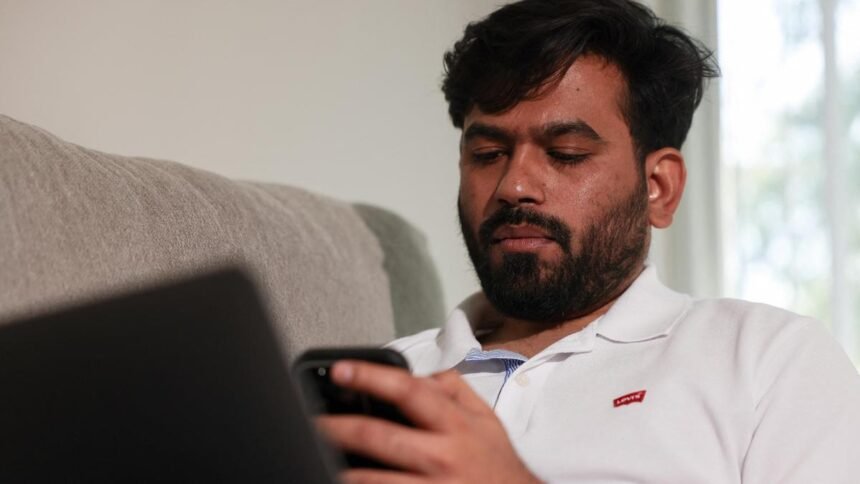
What began as a satirical social media jab at a Supreme Court remark has, in less than three weeks, transformed into something its founder never anticipated. The Cockroach Janta Party (CJP) is no longer just a digital joke. It is transitioning into a real-world political movement.
Abhijeet Dipke, the 30-year-old Boston University graduate who launched the CJP after Chief Justice Surya Kant reportedly compared unemployed youth to “cockroaches,” has announced his return to India. On June 6, he will lead a peaceful protest at Jantar Mantar in New Delhi, demanding the resignation of Union Education Minister Dharmendra Pradhan over alleged irregularities in major examinations, including the NEET paper leak .
From satire to serious politics
“It is no longer a joke,” Dipke told Mumbai Mirror in an interview before announcing the protest. “More than 20 million people have shown faith in me. The youth has lost faith in the government because there is no accountability” .
The CJP’s Instagram handle has amassed over 22 million followers — more than double the BJP’s 9.5 million and significantly higher than the Congress party’s 13.9 million on the platform . Its website has registered approximately 800,000 users, and an online petition demanding the Education Minister’s resignation has gathered nearly 800,000 signatures .
Dipke insists the movement was never planned. “If someone had told me five days earlier that I would have 20 million followers, I would have laughed,” he said. “But it happened overnight, and that itself shows how unhappy and frustrated young people are with the current regime” .
The June 6 protest: A defining test
In a video message posted on X, Dipke called on supporters to gather at the Delhi airport upon his arrival. From there, they will march to the Parliament Street police station to seek formal permission for the Jantar Mantar demonstration .
“My friends and family are afraid that I will be arrested right at the airport and then sent to jail,” Dipke admitted. “But I still hope that our country is still a democracy today and that we will be granted permission to protest peacefully” .
The announcement has divided social media. Supporters have called it a courageous step from “keyboard activism to high-stakes street mobilization” . One user wrote: “Finally someone with balls. Abhijeet Dipke heading back to India to protest at Jantar Mantar, respect” .
Critics have been less generous. Some labelled the move “remote-control activism” and questioned how many of the CJP’s millions of online followers will actually show up. “Anything less than 10% of your total Instagram followers will prove CJP’s incompetence,” one user warned .
Why the Education Minister?
The protest targets Dharmendra Pradhan over a series of examination controversies that have engulfed the ministry. The NEET-UG paper leak, which forced the cancellation of an exam taken by over 22 lakh medical aspirants, has become the flashpoint . Alleged irregularities have also been reported in CBSE, CUET, and SSC-GD recruitment tests, affecting millions of students across the country .
“Students have committed suicide and the hard work of tens of thousands of students has been destroyed,” Dipke said in his video address, directly blaming the Education Ministry for a “comprehensive breakdown of trust” .
The government’s response and legal hurdles
The CJP has faced significant pushback. Its main X account was blocked under Section 69A of the Information Technology Act following inputs from the Intelligence Bureau citing “national security concerns” . The party’s website was also temporarily taken down.
Union Minister Kiren Rijiju suggested without evidence that the movement was backed by “Pakistan and the George Soros gang” . Dipke has dismissed these claims as attempts to delegitimise genuine youth discontent.
“The more the government tries to suppress this movement, the more momentum it gains,” he said. “The government is scared because it realises that the youth is moving away from them” .
The Delhi High Court has issued notice to the Centre on Dipke’s plea seeking restoration of the CJP’s social media accounts and directed the IT Rules review committee to examine the blocking order .
More than a meme: The CJP’s demands
Beyond the immediate demand for the Education Minister’s resignation, the CJP has articulated a five-point agenda. It includes demands that no Chief Justice shall be granted a Rajya Sabha seat after retirement, that Election Commissioners who delete legitimate votes shall be arrested under UAPA, that women shall receive 50 per cent reservation in Parliament and Cabinet positions, and that media licences held by houses owned by Ambani and Adani shall be cancelled .
Dipke acknowledges these demands are aspirational. “This is about what the ideal situation should be and what we should strive for,” he said. “The greatest threat to Indian democracy today is that all institutions seem to be aligned with the ruling party” .
The challenge ahead: From clicks to crowds
The CJP now faces the same challenge that has frustrated every digital-first political movement: whether online engagement translates into physical mobilization.
The June 6 protest will be the first real test. Dipke has promised that the demonstration will remain entirely peaceful and within constitutional bounds. “We believe in democratic and peaceful protest,” he said. “We are not here to create violence or instability” .