

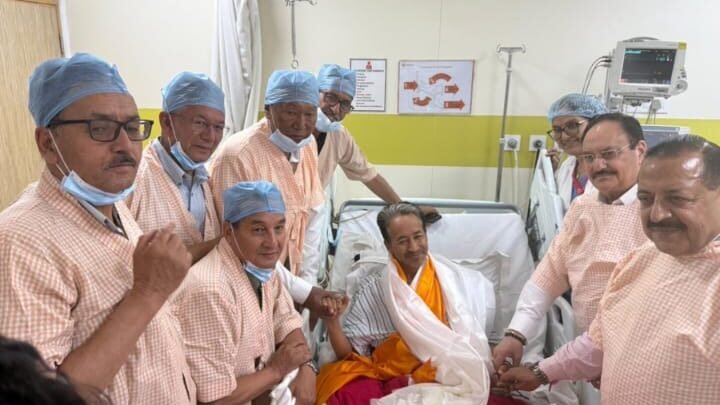
In a post on X, Sonam Wangchuk announced the end of his 26-day hunger strike, thanking supporters while reiterating the need for accountability and reforms in India’s examination system.
New Delhi: The nationwide movement over the alleged NEET-UG 2026 paper leak witnessed two major developments on Thursday. Activist and education reform advocate Sonam Wangchuk ended his 26-day hunger strike after receiving assurances from the Centre, while Prime Minister Narendra Modi announced a series of strict measures aimed at tackling paper leaks and protecting the future of students.
The developments come after weeks of nationwide protests, political demonstrations, and growing public outrage over alleged irregularities in the NEET examination. Student organisations, opposition leaders, and education activists had been demanding accountability, transparent investigations, and comprehensive reforms to India’s examination system.
Sonam Wangchuk Ends 26-Day Hunger Strike
Sonam Wangchuk, who began his indefinite hunger strike in solidarity with students protesting the NEET paper leak, announced the end of his fast after nearly four weeks. His protest had drawn widespread support from students, educators, civil society groups, and several political leaders across the country.
Throughout his hunger strike, Wangchuk called for greater transparency in public examinations, stronger safeguards against paper leaks, and accountability for those responsible for compromising the future of lakhs of students.
While ending his fast, Wangchuk reiterated that the movement was never about an individual but about ensuring justice for students and restoring public confidence in India’s education system. He also urged the government to convert its assurances into concrete action.
PM Modi Announces Strict Action on Paper Leaks
In a separate development, Prime Minister Narendra Modi addressed the issue through a post on X, reaffirming that the aspirations of India’s youth remain the government’s highest priority.
The Prime Minister announced that the Centre would introduce stricter measures to combat examination paper leaks, including the establishment of fast-track courts for speedy trials, stringent punishment for those involved, and stronger mechanisms to safeguard the integrity of competitive examinations.
He said that every effort would be made to ensure that honest students are not forced to suffer because of the actions of organised paper leak networks.
A Movement That Sparked Nationwide Debate
The alleged NEET-UG 2026 paper leak triggered protests across several states, with students demanding fair investigations and systemic reforms in the country’s examination process. The issue also became a major political flashpoint, with opposition parties accusing the government of failing to protect the integrity of one of India’s most important entrance examinations.
Wangchuk’s hunger strike emerged as one of the defining symbols of the movement, drawing national attention to the concerns of students and placing additional pressure on the government to respond.
With Sonam Wangchuk ending his hunger strike and the Centre announcing fresh measures against paper leaks, attention now turns to the government’s next steps.
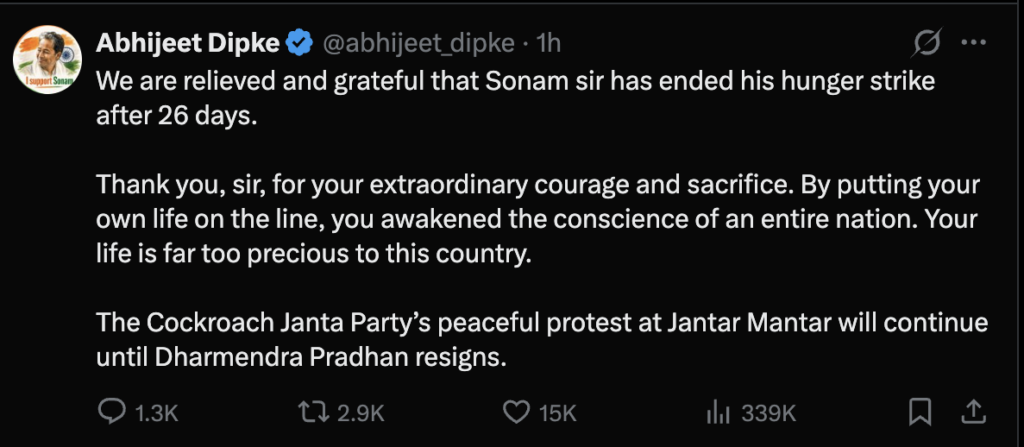
Despite Sonam Wangchuk ending his hunger strike, the movement is far from over. Social activist Abhijeet Dipke, who has been actively involved in the campaign, said the protests will continue with the primary demand that Union Education Minister Dharmendra Pradhan resign, holding him accountable for the alleged failures surrounding the NEET paper leak controversy. He stated that the movement would persist until those responsible are held accountable and meaningful reforms are implemented to restore students’ trust in the examination system as claimed on his X post.
Also read – Sonam Wangchuk Offers Government an Exit Route, Tones Down Demand for Pradhan’s Resignation.