


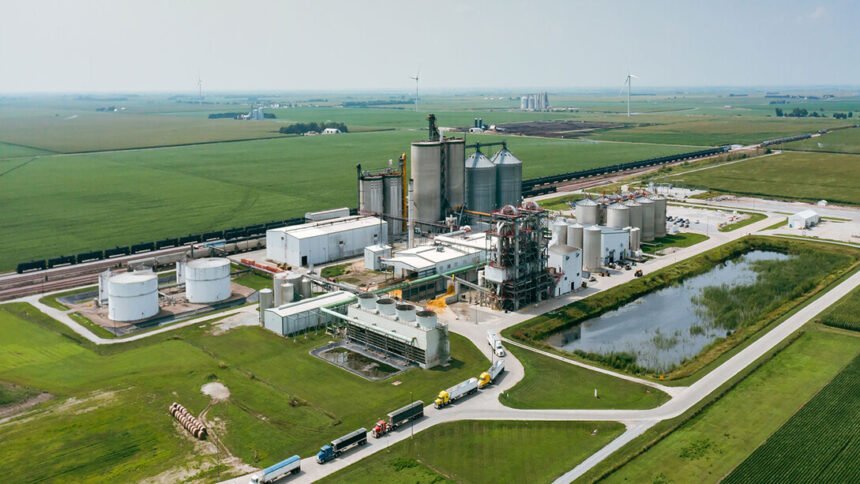
India raced to build ethanol production capacity and achieved its E20 mandate five years ahead of schedule. Now, the big question is whether India has built more production capacity than its current demand.
As India raced to produce more ethanol to meet the 20% ethanol-blending (E20) target, the government encouraged distilleries, banks financed new plants, oil marketing companies signed long-term purchase agreements, and investors poured thousands of crores into expanding capacity. The strategy helped the Centre achieve its E20 target five years ahead of the 2030 deadline. That might have sparked a new problem – not to do with vehicular wear and tear, mileage drops, or environmental concerns, but with the problem of plenty.
While the government has mandated the sale of petrol blended with 20% ethanol, there seems to be a demand-supply mismatch. Industry bodies are talking about surplus capacity and India is looking at exporting ethanol.
The Scale of the Surplus
According to the All India Distillers’ Association (AIDA), India currently has around 370 operational distilleries, with another 40 in the pipeline. The industry has nearly 2,000 crore litres of installed ethanol capacity, and against the current procurement requirement for the Ethanol Blended Petrol (EBP) Programme and other industrial uses, it has a “notional surplus capacity of approximately 700 crore litres.”
For blending with petrol, India uses 1,200 crore litres of ethanol a year. According to a report in The Economic Times, AIDA Deputy Director General Bharti Balaji said the industry was exploring ethanol exports to countries such as Nepal, Bangladesh and Indonesia, all of which have adopted or are moving towards 10% ethanol blending but lack adequate feedstock and distillation capacity.
The Investment at Stake
According to the Ministry of Petroleum and Natural Gas, reverting to E10 would jeopardise investments of nearly Rs 1 lakh crore per year in ethanol production and allied infrastructure financed by public sector banks. Building a distillery involves investments running into tens or even hundreds of crores. According to the Institute for Industrial Development, a commercially viable 30 KLPD ethanol plant could cost Rs 55-60 crore, while larger facilities might require investments of Rs 150-300 crore or more.
So, such huge capital investments would expect sustained demand and production over many years. If demand grows slower than the capacity to supply, plants would have to operate below optimum levels, affecting their profitability and ability to repay capital to financial institutions.
The Grain Game
India’s ethanol story was once closely linked with sugar mills. But now, grain-based ethanol has become the dominant contributor. According to AIDA, grain-based feedstocks now account for nearly two-thirds of ethanol supplies. Maize remained the largest single feedstock with 258 crore litres, followed by broken rice from the Food Corporation of India at 177 crore litres, sugarcane juice at 144 crore litres, B-heavy molasses at 82 crore litres and damaged food grains at 45 crore litres.
The diversification has reduced dependence on a single crop while strengthening year-round availability. However, expanding ethanol production from sugarcane and food grains comes with trade-offs as they are highly water-intensive. A possible El Niño could similarly affect crop output and tighten the stock supply to ethanol plants.
The Road Ahead
The achievement of the E20 target was celebrated by the government as a major milestone. But the before-time ethanol-blended petrol transition has been described as “rushed” by commentators and experts, drawing criticism that the shift was accelerated and left many owners of older vehicles grappling with compatibility and mileage challenges.
While surplus capacity does not mean the ethanol programme has hit a dead end, a longer transition period with the coexistence of E10 and a gradual replacement of older fleet with flex-fuel vehicles could have made things easier for motorists and ethanol manufacturers alike.
On the positive side, rather than struggling to produce enough ethanol in the future, India now has the infrastructure needed to support future growth. But the ethanol surplus is surely a challenge for producers who now have to ensure that they are able to use their production capacity optimally to ensure their investment is viable.