


New Delhi, India – The political temperature in the national capital remained high on Friday as the Jantar Mantar protest entered a new phase. Activist Sonam Wangchuk, who ended his 26-day hunger strike on Thursday night, released a video message asserting he “did not cut any deal” with the government. Meanwhile, the Union Cabinet approved a draft bill for stricter punishments in paper leak cases, even as the Cockroach Janta Party (CJP) declared the resignation of Union Education Minister Dharmendra Pradhan as “non-negotiable.”
In his video message, Wangchuk addressed criticism from social media users, stating that he ended his fast fearing a crackdown against students and protestors at Jantar Mantar. He added that he wanted the presence of Opposition and CJP members at the hospital, but “agencies” did not agree. Wangchuk also said he is contemplating moving a contempt petition in the Delhi High Court, alleging a violation of the court’s order. “After 26 days of hunger, do I need to prove my sincerity?” he asked, asserting that he remains under restrictions at Medanta Hospital.
The government and CJP held talks on Friday at the Constitution Club of India, a neutral venue agreed upon by both sides. Union Health Minister J.P. Nadda and Minister of State for PMO Jitendra Singh represented the government, while CJP national spokesperson Saurav Das led the delegation. Das later stated, “We told the Union ministers that our demand for the resignation of Dharmendra Pradhan is non-negotiable.” CJP also demanded ₹1 crore compensation for families of students who died by suicide and the withdrawal of FIRs against protesters. The government was given 24 hours to consider these demands.
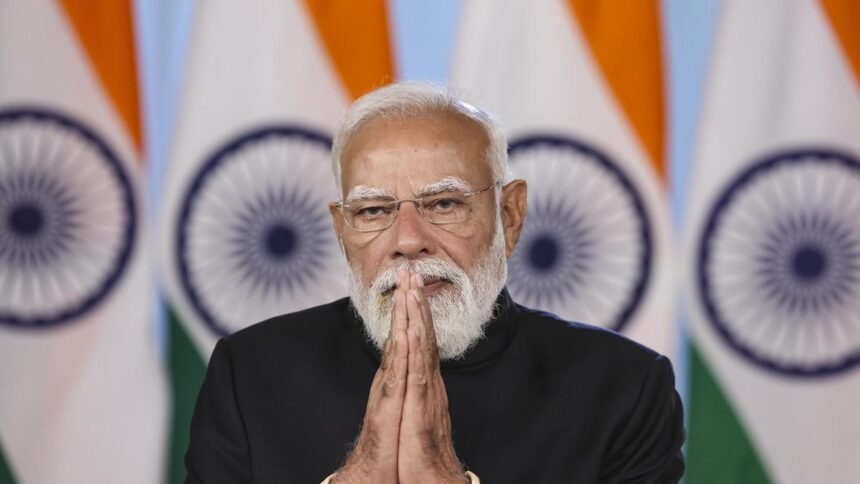
In a related development, the Union Cabinet approved a draft bill to amend The Public Examinations (Prevention of Unfair Means) Act, 2024. The bill proposes a minimum punishment of five years’ imprisonment for individuals involved in paper leaks and a fine of up to ₹10 crore for organized crimes. The decision comes hours after Prime Minister Narendra Modi announced plans for fast-track courts in a video message. However, Congress MP Karti Chidambaram termed these “post-fact actions,” questioning the government’s ability to prevent systemic leaks.
As the protest continues, security measures have been tightened across Delhi. Seventeen metro stations remained closed, and the Central Reserve Police Force (CRPF) is verifying reports of pellet gun use by the Rapid Action Force (RAF) during the July 20 march to Parliament. The Delhi High Court refused to entertain a PIL seeking an NIA probe into the march, stating authorities would take action according to the law. Meanwhile, protests spread to other cities, with marches in Pune, Kolkata, Hyderabad, and Mumbai, where Shiv Sena (UBT) held a ‘Tiranga Morcha.’ The Supreme Court is set to hear petitions on July 27 alleging police brutality during the protests, as the demand for accountability intensifies.