


New Delhi: India’s GDP grew by 7.8% year-on-year in the April-June quarter of 2026, exceeding market expectations, while Avaada Group has separately signed an agreement with the Haryana government for a proposed ₹10,000-crore green industrial campus in Hisar.
The two developments come as India continues to see investment in manufacturing, infrastructure and energy-related projects.
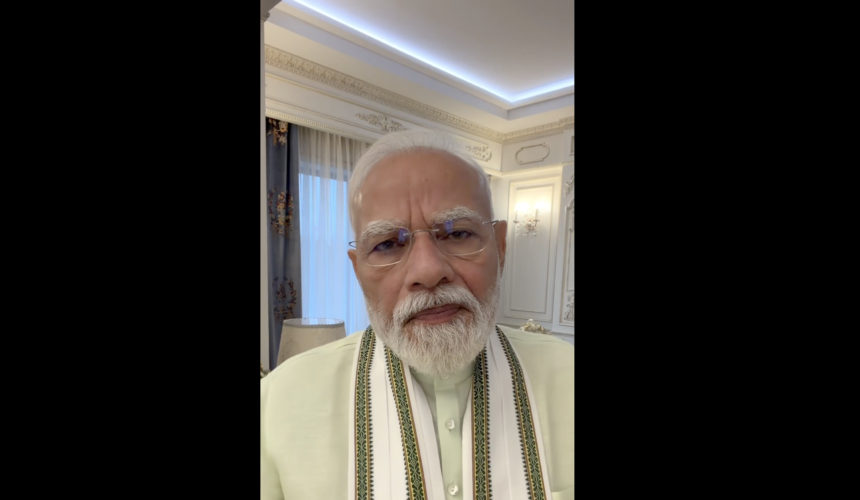
The announcement also received attention from Prime Minister Narendra Modi’s social media account. A video highlighting the development was shared on his X account early Tuesday, drawing attention to the proposed project and its investment plans.
India Records 7.8% GDP Growth
India’s Gross Domestic Product (GDP) grew 7.8% in the first quarter of the 2026-27 financial year, according to data released on Monday.
The growth was higher than the 7.1% forecast by economists and the Reserve Bank of India’s earlier projection of 7%. However, it was lower than the revised 8.6% growth recorded in the previous quarter.
Manufacturing was among the sectors contributing to the latest growth, expanding 9.2% during the quarter. Financial services and other parts of the services sector also recorded growth.
Economists have pointed to domestic consumption, investment and government spending as some of the factors supporting economic activity during the quarter.
Avaada Plans ₹10,000-Crore Campus in Hisar
Separately, Avaada Group has signed a Memorandum of Understanding (MoU) with the Haryana Enterprises Promotion Centre (HEPC) to develop a proposed 300-acre Zero-CBAM Green Industrial Campus in Hisar, Haryana.
The proposed investment is approximately ₹10,000 crore, while the project is expected to have the potential to generate more than 5,000 employment opportunities, according to the company.
The proposed campus is planned to operate using round-the-clock renewable energy. It is intended to support industries seeking to reduce the carbon intensity of their operations and meet international sustainability requirements.
What Is the Zero-CBAM Campus?
CBAM refers to the Carbon Border Adjustment Mechanism, an European Union policy that applies carbon-related requirements to certain imported goods.
The proposed campus is being positioned as a facility where manufacturers can use renewable energy and prepare their operations for carbon-related requirements in international markets.
Under the MoU, the Haryana government is expected to facilitate the proposed project through infrastructure, connectivity, utilities and assistance with statutory approvals. The state may also explore incentives and industrial-park status for the development.
Investment Still at Proposal Stage
The ₹10,000-crore figure refers to the proposed investment associated with the project. The announcement is based on an MoU between Avaada and the Haryana government and does not mean that the entire amount has already been invested.
Avaada and the Haryana government have also said they will work to attract anchor investors, technology partners and industrial participants to the proposed campus.
The project is therefore at the planning and development stage, with further steps required before the proposed investment and employment figures can be realised.
India’s Growth and New Investment
India’s latest GDP figures and the Avaada-Haryana agreement represent separate developments. The 7.8% GDP growth figure reflects overall economic activity during the April-June quarter, while the Avaada project is a proposed private-sector investment in Haryana.
The two developments are relevant to the broader areas of economic activity, manufacturing and energy investment, but the available announcements do not establish a direct connection between Avaada’s proposed project and India’s latest GDP growth.
Also read – PM Modi Meets Iranian President Pezeshkian on SCO Sidelines, Discusses West Asia Peace and Trade