


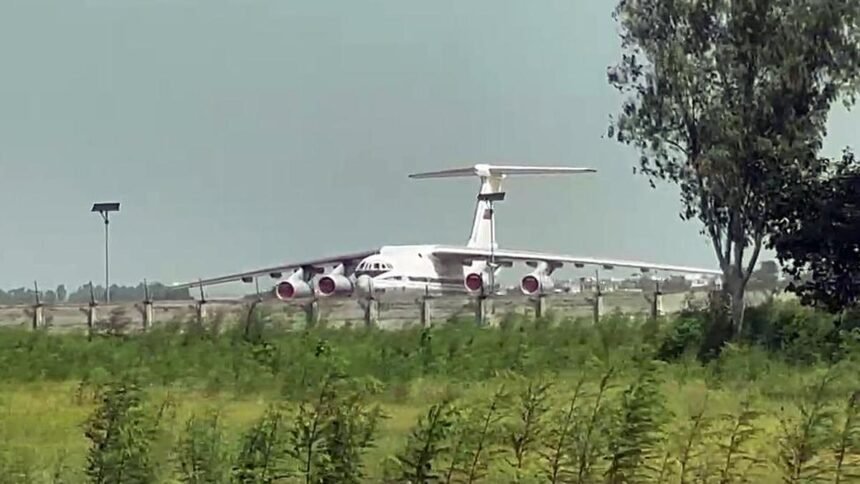
New Delhi, India – Behind the red carpets, motorcades, and ceremonial welcomes for BRICS leaders is a tightly coordinated aviation operation involving around 35 special aircraft, multiple airports, controlled airspace, and carefully timed movements to accommodate foreign dignitaries without disrupting Delhi’s regular commercial flights. The operation spans the Indira Gandhi International Airport, the Indian Air Force’s Palam technical area, and other airports being used to park visiting aircraft, with the CISF, Air Force, aviation authorities, and airport operator coordinating the movements.
For regular passengers, the airport operation begins with processing inside the terminal before boarding via an aerobridge. VVIP movements are kept separate. Ceremonial facilities are used for senior visitors such as ministers, while the highest-level visitors are handled through the Palam technical area, which allows VVIP aircraft to arrive outside the regular passenger-terminal operation. A senior CISF official said the movement from the aircraft to the convoy is planned to prevent the final route from becoming predictable. “Multiple exits and vehicles are kept ready, with the exit ultimately used for the VVIP movement decided towards the last stage,” the source said.
The larger exercise is taking place in the air as well. During a normal VVIP movement, airspace is regulated for about three to four minutes, but with several foreign leaders arriving and departing, these controlled windows have been extended. The Directorate General of Civil Aviation has imposed restrictions on non-scheduled flight operations within a 300-km radius of Delhi from September 11 to 13, while scheduled commercial flights are exempt. Airlines are being fitted around VVIP movements, with timings adjusted by about 10-15 minutes where necessary. If an overlap occurs, an aircraft may be held in the air or directed to land at another airport temporarily.
Must Read: ‘Carrie’ Trailer: Mike Flanagan Brings Stephen King’s Horror Classic into the Social Media Age
Parking the special aircraft is another part of the exercise. Besides Palam and Delhi Airport, Noida International Airport, Safdarjung Airport, Hindon Airport, and two other airports have been incorporated into the wider parking plan. Security operations extend to the aircraft once they are on the ground, with additional checks including testing two samples of aviation fuel supplied to an aircraft. Flying activities involving light and micro-light aircraft and unmanned aerial vehicles have also been restricted within a 300-km radius of Delhi. For the agencies involved, the task is to sequence each movement—in the air, on the ground, and through the airport—so that an exceptional concentration of VVIP traffic does not interrupt the routine flow of commercial aviation.