


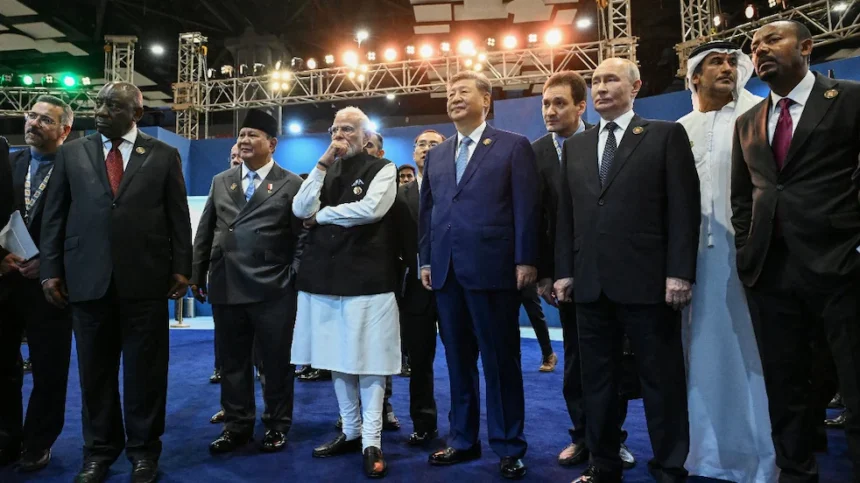
New Delhi: BRICS member countries have reached consensus on the New Delhi Declaration, overcoming differences between Iran and the United Arab Emirates (UAE) over the wording on the ongoing tensions in West Asia.
The agreement came during the BRICS summit hosted by India, where member states discussed major geopolitical and economic issues affecting the global community.
The declaration calls for maximum restraint amid the escalating tensions in West Asia and stresses the importance of dialogue and diplomacy to resolve international disputes. The member countries also urged all sides to avoid actions that could further destabilise the region.
Iran-UAE Differences Challenge Consensus
Reaching an agreement on the declaration was reportedly difficult because Iran and the UAE had differing positions on the conflict in West Asia.
Iran had pushed for stronger criticism of military actions by the United States and Israel, while the UAE wanted the declaration to also address attacks attributed to Iran against neighbouring countries.
After negotiations, the two sides agreed to language that focused on reducing tensions and encouraging diplomatic engagement rather than directly assigning blame.
Focus on Global Trade and Economy
The New Delhi Declaration also addresses broader economic concerns, including unilateral tariffs and other trade measures that could disrupt global supply chains and increase uncertainty in international commerce.
BRICS members reiterated the need to strengthen multilateral trade mechanisms and ensure greater representation for developing countries in global economic institutions.
Must Read: ‘Fall 2: Deadpoint’ Review: A Terrifying Climb That Loses Its Footing
Significance for India’s BRICS Presidency
The adoption of the declaration is being viewed as an important diplomatic achievement for India, particularly given the differences among BRICS members on sensitive geopolitical issues.
The consensus highlights India’s role in facilitating dialogue among countries with different strategic interests and demonstrates the bloc’s effort to maintain a common position on major global challenges.
The agreement comes at a time when tensions in West Asia remain high, making the BRICS consensus particularly significant for India’s diplomatic outreach and the group’s evolving global role.