


New Delhi, India – The government has effectively ruled out the wider use of ethanol-blended diesel after scientific evaluations found that the fuel failed to meet required safety specifications. In a written reply to Parliament, Minister of State for Petroleum and Natural Gas Suresh Gopi said that tests conducted by public-sector oil marketing companies (OMCs) in collaboration with accredited laboratories and automobile manufacturers revealed that the addition of ethanol sharply lowered the fuel’s flash point, making it unsafe for use. “Ethanol blended diesel was not meeting diesel flash point as its flash point lowered drastically due to the presence of ethanol,” the Minister stated.
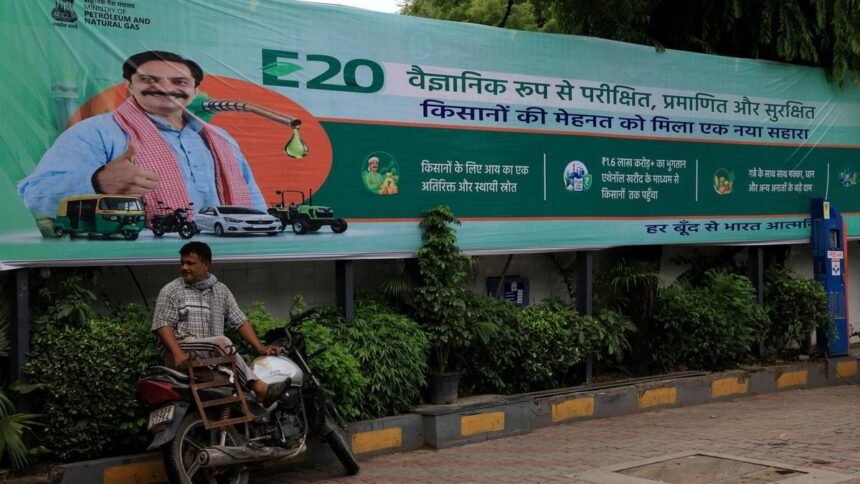
The finding comes as India seeks to expand its ethanol blending program beyond petrol, where it has set a target of 20% blending. The government is also exploring ethanol as a potential cooking fuel to reduce dependence on imported LPG. However, the diesel blending tests have highlighted a significant technical hurdle that must be resolved before wider adoption can be considered. The Minister also clarified that no decision has been taken to raise ethanol blending in petrol beyond 20%, and that any future increase would only be considered after detailed scientific and technical studies and consultations with automobile manufacturers, OMCs, and research institutions.
Must Read: Jharkhand Job Aspirants March for ‘Lost Years’ Amid Police Crackdown
State-run OMCs floated their first tender in September 2025 to procure about 10.5 billion litres of ethanol for the 2025-26 supply year, receiving offers for nearly 17.6 billion litres. The government is also supporting domestic ethanol production through interest-subvention schemes, support for cooperative sugar mills, and long-term offtake agreements. Meanwhile, the LPG Equipment Research Centre, a joint venture of Indian Oil Corp., Hindustan Petroleum Corp., and Bharat Petroleum Corp., is developing ethanol-based clean cooking alternatives. The government emphasized that the initiative aligns with its broader objective of promoting cleaner fuel options, but the diesel blending setback underscores the need for continued research and technological development.