


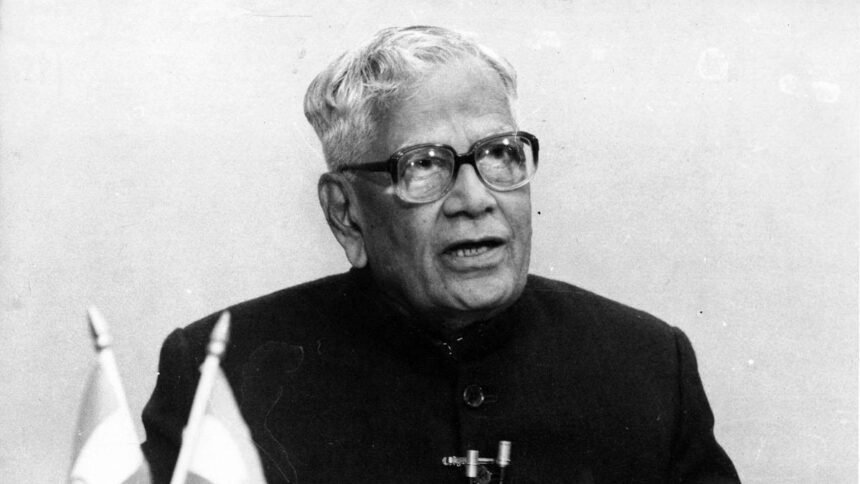
In 1992, a rare and notable controversy arose in Tamil Nadu over the allocation of a government bungalow to former President R. Venkataraman, marking a departure from the state’s long-standing tradition of its leaders using private residences.
The issue surfaced against a backdrop of deeply ingrained political culture. In stark contrast to other states like Uttar Pradesh or Bihar—where disputes over government housing often lead to legal battles—Tamil Nadu has maintained a “healthy tradition” of Chief Ministers using their own private homes, both while in office and after losing power .
A Tradition of Private Residences
For decades, the state’s political leaders have largely avoided the political optics and legal tangles associated with government-provided accommodation. In the last ten years, only former Chief Ministers O. Panneerselvam and Edappadi K. Palaniswami have used official government bungalows. This was due to a practical reason: they did not own houses in Chennai .
Edappadi K. Palaniswami, who utilized government accommodation for 15 years across different roles, recently moved to a private property in Royapettah. His departure from the official bungalow was executed without any of the controversy that has plagued similar situations in other states . The state has rarely seen any disputes regarding the housing of former Chief Ministers.
The 1992 Venkataraman Case
The incident involving R. Venkataraman was an exception to this norm. The former President required a residence in Madras (now Chennai), and the state government of the time was confronted with a situation that broke from tradition.
By extending a government bungalow to Venkataraman, the administration deviated from the established practice, sparking a rare political debate. The decision was seen as an anomaly, highlighting the distinction between the unspoken rule of self-sufficiency for state leaders and the accommodation provided to a former head of state.
This 1992 controversy stands in sharp contrast to the recent eviction notice served to former Bihar Chief Minister Rabri Devi, illustrating the different standards and practices between the states . While Tamil Nadu’s leaders often opt to move to private homes, leaders in other states have frequently needed judicial intervention, such as the Supreme Court’s 2016 ruling that former Chief Ministers do not have a right to hold onto government bungalows for life .
A Legacy of Contrast
The episode remains a unique footnote in Tamil Nadu’s history, demonstrating how the state’s political culture of avoiding government accommodation has generally prevented the type of high-stakes housing disputes seen across India. The 1992 controversy over the bungalow remains a rare moment when the state deviated from its path.