


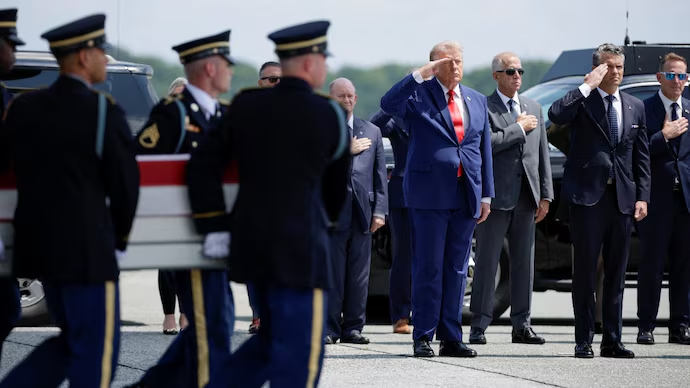
Dover, Delaware – President Donald Trump on Wednesday attended the solemn “dignified transfer” of four American service members killed in the ongoing war with Iran, as the conflict’s human and financial costs continue to escalate. The flag-draped caskets arrived at Dover Air Force Base in Delaware, where Trump, dressed in a blue suit and red tie, stood at attention and saluted while military honor guards carried each transfer case from the aircraft. Family members watched quietly as the remains were placed into waiting transport vans.
“This is one of the hardest things to do as a president. But it has to be done,” Trump told reporters before departing for the ceremony. “All I’m going to say is, we love you. We love your child, and that’s what they are to them. They’re their children. There’s no games, no nothing.” The war with Iran has now claimed the lives of 18 US service members and injured over 500 more, according to a US official. It has also cost American taxpayers at least $37.5 billion, pushed up global oil prices, and triggered growing political debate in Washington over its objectives.
According to Reuters, three of the fallen troops—First Lieutenant Tyler James Feehan, 25; Sergeant Angel S. Rampersad, 28; and Private Isabella Gonzales, 19—were killed when an Iranian missile struck their sleeping quarters at Muwaffaq Salti Air Base in Jordan last Friday. All three served in US Army air defense brigades. The fourth service member, Sergeant Michael Emmanuel Swinton, 30, died on Sunday in Erbil, Iraq, during the controlled detonation of a downed Iranian attack drone.
The ceremony follows a long-standing tradition at Dover, home to the United States’ largest military mortuary. Trump’s attendance comes as criticism of the war grows on both sides of the political aisle, with lawmakers questioning the conflict’s objectives. A recent Reuters/Ipsos poll found that four in five Americans expect the conflict to continue for an extended period, though 37% approve of US military strikes on Iran. Trump dismissed suggestions that public support has weakened, stating, “Nobody wants Iran to have a nuclear weapon. You think it’s good?”
The Pentagon has reported that at least 100 service members have been injured since July 7, with 96% returning to duty. House Speaker Mike Johnson has urged a resolution to the conflict, while Trump has continued to insist that Tehran will “pay a big price” for attacks on US personnel. As casualties mount and the war shows no signs of ending, the administration faces increasing pressure to outline a clearer path forward.