


The White House announced on Thursday night that Vice President JD Vance has postponed his planned trip to Switzerland, where he was set to lead a new round of negotiations with Iran over its nuclear program. The delay has raised fresh questions about the future of the tentative agreement to end the months-long war .
The White House cited “difficult logistics” for the postponement, stating that plans for the technical talks have not been finalized . A spokesperson noted that while the U.S. delegation has been prepared to depart at the first available opportunity, “the logistics of these negotiations have never been simple or predictable” .
Uncertainty over Iran’s Delegation
The postponement followed reports that Iran was also delaying the sending of its own delegation to Switzerland. According to Al-Mayadeen, a pan-Arab satellite channel politically allied with the Iranian-backed Lebanese militant group Hezbollah, Iran’s delay was linked to Israel’s ongoing military campaign in Lebanon .
Iran’s chief negotiator, Mohammad Bagher Ghalibaf, later warned against any breach of the agreement, stating that “in case of misconduct, breach of treaty and excess of the other side, We have no doubt that decisive respond will be given to the enemy” .
The Deal and Its Critics
The postponement comes just a day after President Donald Trump signed an initial pact with Iran while dining with French President Emmanuel Macron at the Palace of Versailles . The deal, which extends a ceasefire for 60 days, includes the lifting of the U.S. naval blockade on the Strait of Hormuz, allowing oil tankers to move freely through the critical channel for the first time in months .
However, the preliminary agreement has drawn sharp criticism from some U.S. lawmakers, including a few congressional Republicans, who worry that Washington has ceded too much to Tehran . Key concerns include the granting of sanctions relief and a potential $300 billion fund to help rebuild Iran .
Vance Defends the Deal
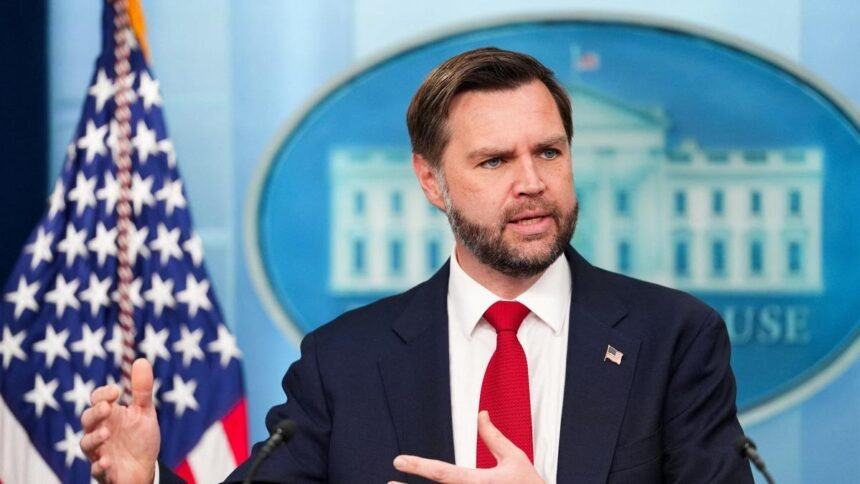
Earlier Thursday, Vance appeared at the White House to defend the agreement. He argued that while it offers concessions, Iran must first comply with U.S. demands. “As they dial up their good behavior, we can dial up the economic relief,” Vance said. “If they dial down their good behavior, we can turn it off” .
Vance had previously said he was uncertain about the timing of his trip, and the formal postponement now makes that even less clear . A top Trump administration envoy also told U.S. lawmakers in a private briefing that Iran will invite the U.N.’s nuclear watchdog agency to inspect its nuclear sites .
Vance Defends Deal and Warns Israel
Vance shrugged off criticism about the confusing rollout of the initial deal, saying, “I don’t think our public messaging has been chaotic” . He also offered a blunt warning to Israel, which has pushed the U.S. to take a harder stance against Iran .
As the administration navigates the uncertain path forward, the delay underscores the complexities of negotiating with Iran and the fragile nature of the ceasefire.