


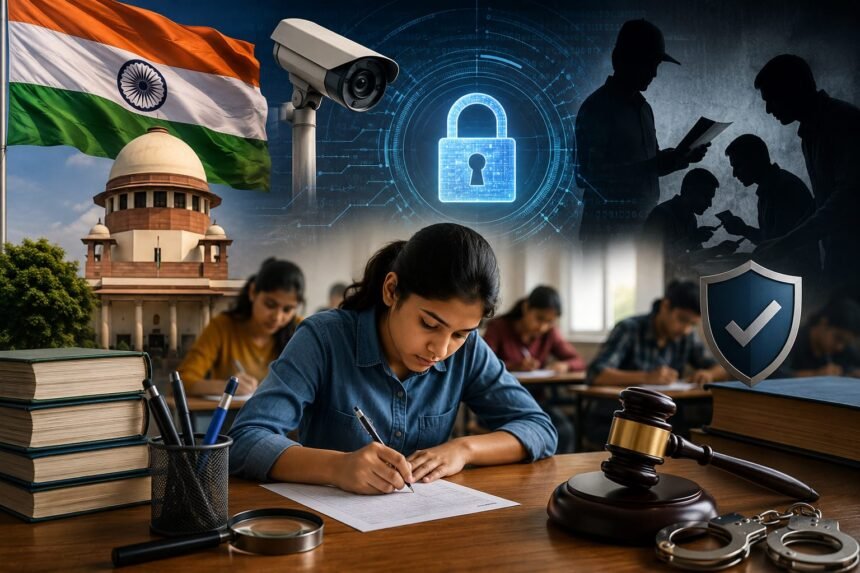
New Delhi, July 27, 2026: The Central Government has introduced a major amendment to strengthen India’s public examination system after a series of examination paper leak incidents sparked nationwide protests and raised concerns over the future of millions of students. The proposed reforms aim to make recruitment and entrance examinations more secure, transparent, and technology-driven while ensuring strict punishment for those involved in unfair practices.
Government Responds to Paper Leak Incidents
The move comes after the cancellation of major examinations due to question paper leaks, which affected lakhs of students across the country. The incidents triggered widespread demonstrations by students demanding fairness, accountability, and reforms in the examination process. Responding to these concerns, the government has introduced amendments to the Public Examinations Act, making penalties significantly stricter for individuals and organisations found guilty of malpractice.
Stricter Penalties Proposed
According to the proposed amendments, the minimum prison sentence for those involved in examination paper leaks will increase from three years to five years. Financial penalties have also been raised substantially, with maximum fines increasing from ₹1 crore to ₹5 crore. Companies found guilty of facilitating examination fraud may also face an extended ban from participating in government examination-related work for up to eight years. The government believes these measures will discourage organised cheating networks and restore confidence among students.
Nandan Nilekani to Head High-Powered Task Force
Prime Minister Narendra Modi also announced the formation of a high-powered task force headed by Infosys co-founder Nandan Nilekani. The committee will recommend modern technological solutions to improve examination security. The panel is expected to suggest advanced digital monitoring systems, computer-based examinations, artificial intelligence-assisted surveillance, encrypted question paper distribution, and stronger cybersecurity measures.
Focus on Prevention and Technology
Officials have stated that the reforms will not only focus on punishment but also on preventing future leaks through better planning and stronger coordination among examination agencies. Many of the recommendations made by earlier expert committees—including conducting more computer-based tests, holding examinations in multiple shifts, and improving the functioning of the National Testing Agency—are expected to be implemented gradually over the coming months.
Education Experts Welcome the Move
Education experts have welcomed the government’s decision, saying that transparent and secure examinations are essential for maintaining merit-based selection. Many believe that adopting modern technology will reduce human interference and minimise opportunities for organised cheating. However, experts have also stressed that successful implementation will require proper infrastructure, trained personnel, and regular audits of examination systems.
Students Hope for Lasting Reforms
Students across the country have expressed hope that these reforms will restore trust in competitive examinations. Several student organisations have urged the government to ensure that investigations into previous paper leak cases are completed quickly and that those responsible receive strict punishment. They also demanded timely conduct of examinations so that students do not suffer unnecessary delays in admissions and recruitment.
Reforms Await Parliamentary Approval
The proposed reforms are expected to be discussed in Parliament before becoming law. If approved, they will represent one of the most significant overhauls of India’s public examination system in recent years. The government has stated that protecting the future of students and ensuring fairness in examinations remains one of its highest priorities.
Key Highlights
- Government introduces amendments to strengthen examination security.
- Minimum jail term for paper leak offences increased to five years.
- Maximum fine proposed to rise from ₹1 crore to ₹5 crore.
- Nandan Nilekani to head a high-powered examination reform task force.
- Greater use of technology and computer-based testing planned.
- Reforms aim to restore public confidence in competitive examinations.