


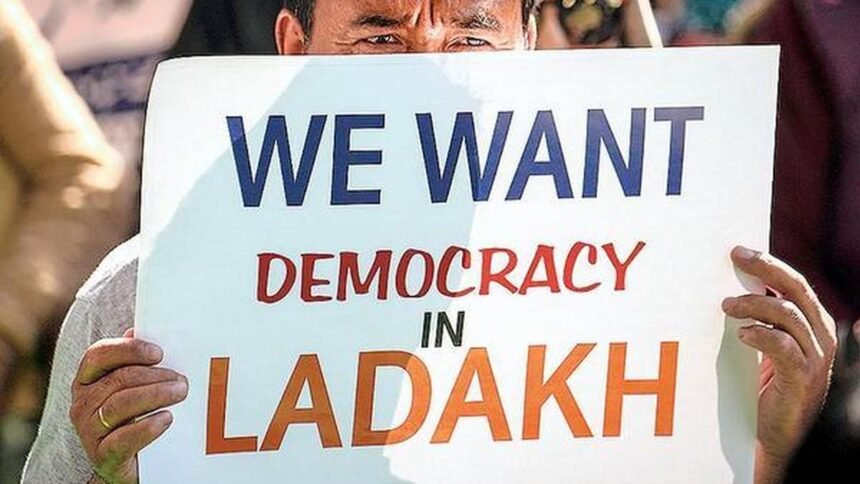
The Ministry of Home Affairs has proposed a new constitutional framework for Ladakh, introducing a “Chapter K” under Article 371 to grant the Union Territory greater administrative autonomy and address long-standing demands for tribal protection and local governance.
A Long-Standing Demand
Following the repeal of Article 370 in August 2019 and the subsequent enactment of the Jammu and Kashmir Reorganisation Act, 2019, Ladakh was recognised as a separate Union Territory “without legislature.” Since the separation, organisations like the Apex Body Leh (ABL) and the Kargil Democratic Alliance (KDA) have demanded that Ladakh be included under the Sixth Schedule, which contains provisions regarding the administration of tribal areas in the states of Assam, Meghalaya, Tripura, and Mizoram .
The demand for Sixth Schedule inclusion and protections under Article 371 has been central to the region’s political discourse, with protests and sustained advocacy from local groups seeking greater autonomy to safeguard tribal land, jobs, and cultural identity .
The Proposed Framework
The proposed “Chapter K” under Article 371 would create a new constitutional provision specifically tailored for Ladakh. Unlike the Sixth Schedule, which applies to specific states, Article 371 contains state-specific provisions that grant special powers to governors and enable the creation of development boards. Article 371 explicitly provides for provisions related to Maharashtra and Gujarat, enshrining special responsibilities for the respective governors and enabling the establishment of separate development boards .
The new chapter for Ladakh is expected to include provisions for:
- Protection of tribal land and resources
- Local governance mechanisms with greater representation
- Special powers for the Lieutenant Governor to safeguard the interests of the local population
- Development boards for economic and cultural advancement
Must Read: Adani Airport Holdings Raises $1 Billion from Investors for 5.54% Stake
What This Means for Ladakh
If implemented, the new framework would represent a significant shift in how Ladakh is governed, moving beyond its current status as a Union Territory without a legislature. It would provide a constitutional basis for addressing the unique needs of the region’s tribal communities while maintaining the Union Territory’s administrative structure.
The proposal is being closely watched by stakeholders in Ladakh and is expected to be a key topic of discussion in upcoming political and administrative consultations.