


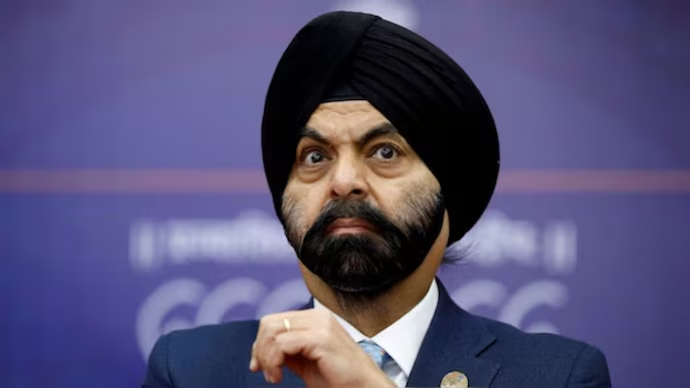
Washington D.C.: The war in the Middle East will have a cascading impact on the global economy, even if a ceasefire announced by U.S. President Donald Trump takes hold, World Bank President Ajay Banga told Reuters in an interview on Friday. He warned that the damage will be far deeper if the ceasefire fails and the conflict escalates.
Economic Growth and Inflation Projections
Banga said global growth could be lowered by 0.3 to 0.4 percentage point in a baseline scenario, with an early end to the war, and by as much as 1 percentage point if it endures. Inflation could increase by 200 to 300 basis points, with a much higher impact if the war continues.
The World Bank’s baseline estimate now projects growth in emerging markets and developing economies of 3.65 per cent in 2026, compared to 4 per cent in October, dropping as low as 2.6 per cent in an adverse scenario. Inflation in those countries is now forecast to hit 4.9 per cent in 2026, up from 3 per cent.
Impact of the War
The war has killed thousands across the Middle East and sent the price of oil up by 50 per cent while disrupting supplies of oil, gas, fertiliser, helium, and other goods, as well as tourism and air travel.
Caution on Energy Subsidies
Banga said the bank was cautioning countries to avoid setting up energy subsidies that they could not afford, which would trigger even bigger problems in the future. Many developing countries also have high debt levels and interest rates remain high, constraining their ability to respond to the jump in energy costs.
Focus on Energy Security
The crisis has put a fresh spotlight on the need for countries to diversify energy supplies. Banga noted that Nigeria has benefited from a USD 20 billion investment in refineries, increasing output during the war. The World Bank is also working with Mozambique to expand its energy production. He added that without nuclear, hydro, and geothermal energy at scale, countries will end up doing more with traditional fuels.