

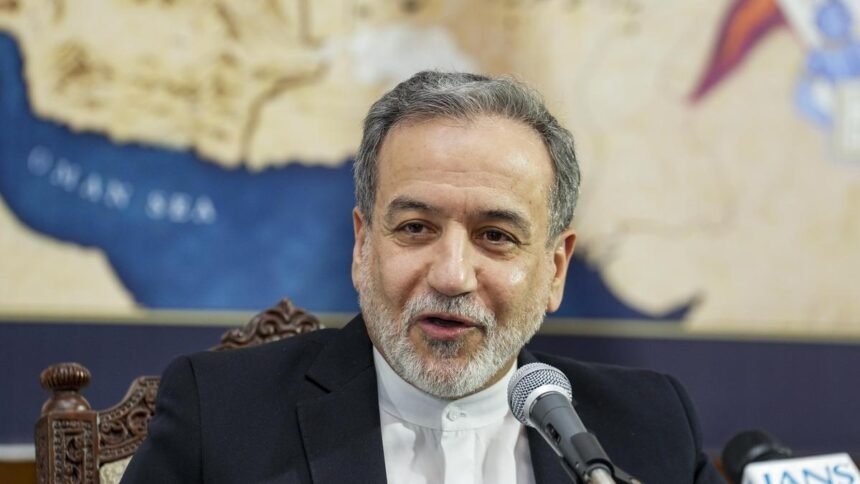
Iranian Foreign Minister Abbas Araghchi has issued a stark warning that any Israeli attack on Beirut would trigger a “full-scale resumption” of the war, as tensions escalate along the Lebanon-Israel border .
In an interview with Lebanon’s Al Mayadeen television channel on Wednesday, Araghchi declared that Iran’s “armed forces are ready to strike Israel if it attacks Beirut,” adding that Tehran would not remain silent in the face of an assault on the Lebanese capital .
Two fronts, inseparable
Araghchi framed the conflicts in Iran and Lebanon as intrinsically linked, insisting that any ceasefire must apply simultaneously to both countries.
“The fate of the war between Iran and the Zionists (Israel) and Americans is inseparable from the fate of the battle in Lebanon, and these two fronts have been intertwined since day one,” Araghchi told the pro-Hezbollah broadcaster .
He further insisted that for the war in Lebanon to end, Israeli forces must withdraw from Lebanese territory. “The end of the war in Lebanon also means the end of the occupation. That is, the end of the war must be accompanied by the withdrawal of the Zionist regime’s forces from the areas they have occupied,” he said .
Military alert and diplomatic backchannel
Araghchi revealed that Iran had placed its armed forces on full alert for a potential counterattack when Israel recently threatened to strike Beirut’s southern suburbs . “At the moment when Israel threatened to attack the suburbs of Beirut, we adopted a decisive stance,” he said .
Despite the heightened tensions, Araghchi confirmed that communication channels between Tehran and Washington remain open. However, he acknowledged that “no tangible progress has been made in the negotiation process” .
“Messages have been exchanged regarding the need to stop aggression against Beirut, but no tangible progress has been made,” Araghchi told Al Mayadeen, as quoted by Iran’s Tasnim news agency .
US-Iran talks continue amid skepticism
The Iranian foreign minister set strict conditions for any formal resumption of diplomatic talks. “Returning to the negotiating table is conditional on ensuring the rights of the Iranian people, ending the war in Lebanon, and stopping tensions in the region,” he stated .
The comments come as Israeli and Lebanese diplomats prepare for a second day of direct talks in Washington — the fourth round of such negotiations since Hezbollah joined the wider West Asia war on March 2 . Hezbollah has sharply opposed these direct negotiations between Lebanon and Israel .
Trump touts progress, military actions continue
US President Donald Trump has expressed optimism about ongoing negotiations, recently claiming that he had secured commitments from both Israel and Hezbollah to halt hostilities and prevent a wider Israeli offensive in Lebanon .
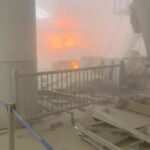
However, on the ground, tensions remain high. Iran’s Islamic Revolution Guard Corps (IRGC) on Wednesday carried out missile and drone attacks on US bases in Kuwait and Bahrain, in retaliation for a US attack on an IRGC communications tower on Iran’s southern Qeshm Island .
The ceasefire, already fragile, has been repeatedly strained by ongoing Israeli strikes on Lebanon. Israeli army chief of staff Eyal Zamir has reportedly asserted that there is effectively “no ceasefire” in Lebanon, despite US diplomatic efforts .
Iran’s dual message is clear: it is prepared for a prolonged confrontation while remaining open to a political resolution — but only if its core conditions, including a complete halt to attacks on Lebanon, are met .