


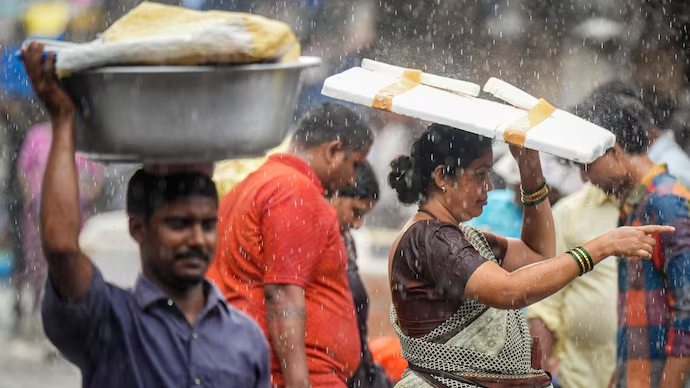
A day after the southwest monsoon finally arrived, intense rain accompanied by lightning and thunderstorms lashed Mumbai on Monday, triggering waterlogging and severe traffic disruptions across several parts of the city. The downpour brought large swathes of India’s financial capital to a halt as commuters found themselves stuck in slow-moving traffic on major arterial roads .
Traffic chaos and waterlogging hit key corridors
The heavy spells led to flooding on several roads, with areas like Andheri, Vile Parle, Bandra, Ghatkopar, and Mulund reporting significant water accumulation . Commuters reported long traffic queues on the Western Express Highway (WEH) and Eastern Express Highway (EEH), with slow-moving traffic near the Vakola Bridge, Kalina, and the Jogeshwari Flyover .
As water levels rose, the traffic police diverted vehicles from the Andheri Subway — one of the city’s most notorious flood spots — through the Gokhale Bridge and S.V. Road to prevent vehicles from getting stranded . The subway was submerged within minutes after nearly 48 mm of rain fell in just 30 minutes, exposing the vulnerability of the city’s drainage infrastructure yet again .
IMD issues yellow alert for more rain
The India Meteorological Department (IMD) had earlier issued a yellow alert for Mumbai, forecasting thunderstorm activity along with moderate to intense rainfall and gusty winds reaching 30-40 kmph at isolated places . The alert was later escalated to an orange warning for Monday morning, valid for three hours, as the city experienced its first major monsoon spell .
While the heavy showers brought relief from days of severe heat and humid conditions, they also revived concerns about Mumbai’s monsoon preparedness, particularly the city’s outdated drainage system that frequently struggles to cope with intense rainfall .
Why Mumbai floods every year
The chaos this Monday was a familiar sight for Mumbaikars. The city’s stormwater drainage system, built during the British era, was designed to handle only 25 mm of rain per hour and has not kept pace with urban expansion . In addition, Mumbai’s geography — with several low-lying areas close to sea level — compounds the problem, as high tides can block stormwater from being discharged .
The monsoon, which had been expected to reach Mumbai on June 11, was delayed due to El Nino conditions . With the season now active, the city remains on alert for more rain in the coming days.