


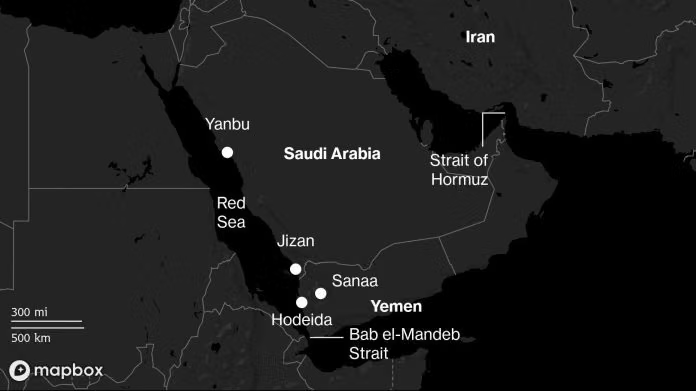
Riyadh, Saudi Arabia – Saudi Arabia, the nation most affected by the Houthis’ threats to commercial traffic in the Red Sea, is forming a naval coalition to restore order in the vital waterway. Following a meeting in Riyadh last week, 14 of the nearly 50 countries and organizations present signed on to the initiative. The coalition includes major naval powers like Egypt, Turkey, and Pakistan, alongside smaller but capable maritime forces from Arab states including Kuwait, Bahrain, Qatar, and Jordan. The move comes as the Houthis, backed by Iran, have been disrupting shipping through the Bab el-Mandeb Strait and the Suez Canal, threatening up to 15% of the world’s petroleum products and 30% of containerized shipping.
The coalition’s composition is strategically significant. Egypt, with its interest in keeping the Suez Canal routes open, boasts one of the largest navies in the Arab world, including two Mistral-class helicopter carriers and eight submarines. Turkey has a modern blue-water fleet with at least 10 diesel submarines, 17 frigates, and nine corvettes, and its amphibious assault ship, TCG Anadolu, could serve as a flagship. Pakistan, a frequent military partner of Gulf states, brings around 10 frigates and five modern diesel-electric submarines. Notably absent are the UAE, which is dealing with its own Iranian drone and missile attacks, and Oman, which often mediates in conflicts.
The coalition’s operational strategy would involve a major intelligence-collection effort to map Houthi patterns and track missile and drone launches, likely with help from the US satellite constellation and the EU naval task force, Operation Aspides. A centralized intelligence operation would be established, either aboard the TCG Anadolu or ashore at the Saudi naval base in Jeddah, staffed by experienced officers from across the coalition. The most practical step would be deploying high-speed patrol craft to shepherd huge tankers into convoys, each accompanied by a guided-missile frigate, with commercial ships embarking small defense teams.
Must Read: Lok Sabha Passes Bill to Allow Charges on UPI Transactions, Amends Payment Systems Act
The coalition’s success hinges on effective Saudi leadership with support from the US and EU. However, questions remain about whether this maritime approach alone will deter the Houthis and their Iranian backers. If not, the next step could involve air attacks on Houthi bases ashore, risking retaliation and escalation. As the western front in the Iran war grows more heated, the question is whether the Saudis and their partners can cool things down enough to keep the Red Sea open.