


The Chinese filmmaker’s latest epic is a mind-bending journey through film history, dream logic, and the immortal power of storytelling
Few filmmakers understand cinema as completely as Bi Gan, whose staggering new epic devours a century of film history before dreaming it back into existence as something thrillingly new. Resurrection is unlike anything else this decade—a film that doesn’t just reference cinema but becomes it, breathing new life into every frame.
The thirty-six-year-old filmmaker from China’s Guizhou province has assembled one of the most singular bodies of work in contemporary world cinema. His debut Kaili Blues (2015) folded memory and geography into a dreamy forty-minute travelling shot. His follow-up, Long Day’s Journey Into Night, expanded those ambitions into an hour-long stereoscopic take. Resurrection represents the logical culmination of those interests—imagining the act of dreaming as cinema’s primary biological function.
The Premise: A World Without Dreams
In the film, humanity has discovered the secret to immortality by abandoning dreams altogether, exchanging imagination for indefinite existence. A handful of dissidents, however, continue to dream despite knowing every dream consumes their lifespan, becoming hunted figures called Deliriants.
Jackson Yee plays one such Deliriant, introduced beneath layers of German Expressionist monster prosthesis, carrying an entire projector embedded inside his body. Shu Qi appears opposite him as a mysterious woman tasked with retrieving him from his dream state. Compassion gradually replaces obligation when she discovers that allowing him one final journey through memory constitutes the only merciful death available.
A Cinematic Odyssey
What follows divides itself into six movements organised around the six senses recognised within Buddhist philosophy: sight, hearing, taste, smell, touch, and finally mind. Each chapter adopts the cinematic vocabulary of a different historical period.
The Silent Era Movement: The opening movement embraces silent cinema with astonishing fidelity. Intertitles replace spoken dialogue, paper-cut silhouettes wander through deliberately artificial sets, and exaggerated painted shadows recall The Cabinet of Dr. Caligari. The fascination with material filmmaking establishes the emotional core—the Deliriant survives because cinema survives.
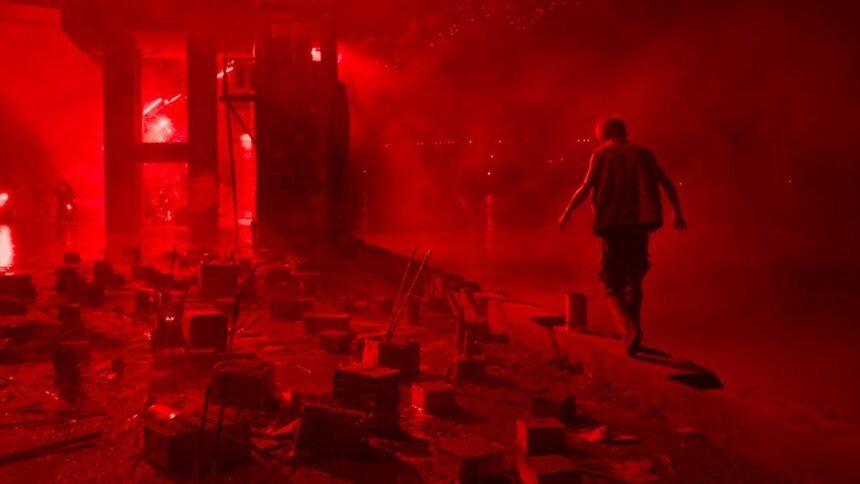
The Wartime Noir: The first dream tears open that handcrafted world and deposits the Deliriant inside a wartime espionage narrative centred around hearing. A bombed railway station disappears beneath dense blue-grey fog, creating a collision between postwar noir and espionage melodrama.
The Monochrome Monastery: The second dream contracts both its scale and its tempo, as the Deliriant reappears as a former monk. Taste governs the chapter through the monk’s relentless toothache, whose extraction releases the Spirit of Bitterness in the form of his dead father. The imagery channels the spiritual austerity of Béla Tarr.
The Con Artist Caper: The third dream explores the grubby professionalism of a small-time con artist, recalling the melancholy street wisdom of Paper Moon filtered through Chinese gangster melodrama. The orphan continues searching for the meaning behind a riddle her absent father left scribbled onto a banknote.
The Vampire Romance: The fourth and final dream takes place on New Year’s Eve 1999 inside a rain-lashed port city, through one of the most breathtaking oners committed to digital cinema. Yee returns as Apollo, a young hoodlum whose greatest source of embarrassment stems from never having kissed anyone. He encounters a vampire kept alive by blood supplied by a local crime lord in exchange for possession of the soil from her grave.
The Verdict: A Masterpiece of Cinematic Love
Every creative department operates with breathtaking precision—from the constantly shifting choreography and hidden lighting cues to the production design that turns wet asphalt into a canvas for fractured neon reflections. M83’s euphoric score steadily gathers momentum alongside time-lapse photography that carries the night towards the first sunrise of the new millennium.
At a moment when cinema seems perpetually preoccupied with its own mortality, few films have made a more exhilarating argument for its immortality. I struggle to think of any as unforgettable as Resurrection.
Resurrection is currently streaming on Prime Video.