


One of the most defining policy debates of our time—development versus environment—will take center stage at The Hindu Huddle in Bengaluru on June 6. The session will feature former Union Environment Minister and Congress MP Jairam Ramesh alongside conservation biologist Dr. Krithi Karanth, CEO of the Centre for Wildlife Studies. NDTV Consulting Editor Gargi Rawat will moderate the discussion .
The conversation will focus on two contrasting landscapes that encapsulate India’s environmental governance challenges: the Aravalli range and Great Nicobar Island .
The Aravallis: An ancient range under pressure
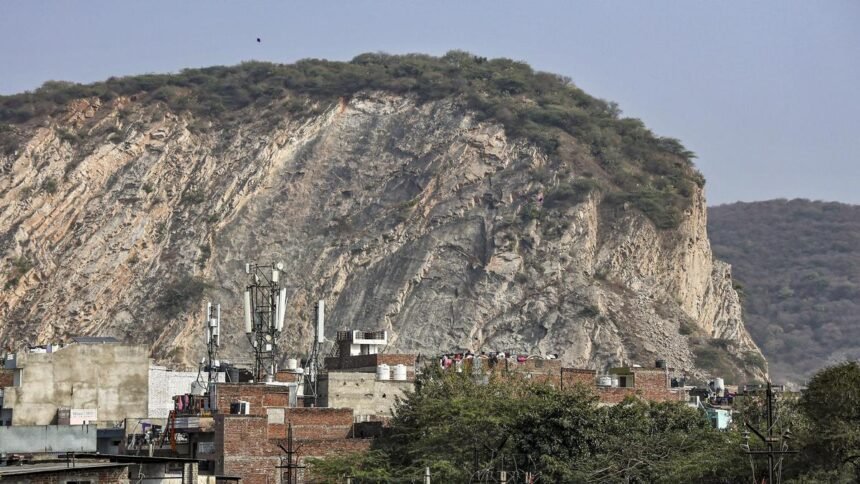
Among the world’s oldest mountain systems, the Aravallis stretch from Delhi through Haryana and Rajasthan into Gujarat. They serve as a natural barrier against desertification, a critical groundwater recharge zone, and a vital biodiversity habitat . However, the range has faced decades of pressure from mining, quarrying, and real estate development.
In November 2025, the Supreme Court accepted a uniform elevation-based definition of Aravalli Hills—landforms rising 100 metres or more above local relief—and imposed an interim moratorium on new mining leases until a comprehensive Management Plan for Sustainable Mining (MPSM) is prepared . The court also directed the Ministry of Environment, Forest and Climate Change to prepare the MPSM through the Indian Council of Forestry Research and Education (ICFRE), identifying permissible and prohibited zones across the entire Aravalli landscape .
Union Environment Minister Bhupender Yadav has asserted that misinformation is being spread on the issue, emphasizing that no new mining leases will be permitted in core, protected, and ecologically sensitive areas, including the Delhi-NCR region. Mining is absolutely prohibited in protected areas, eco-sensitive zones, tiger reserves, wetlands, and CAMPA plantation sites .
Yet concerns persist. Environmental activists have warned that hills and forested areas falling below the 100-metre threshold could lose legal safeguards . Additionally, the Haryana government’s proposed jungle safari project across 10,000 acres in the Aravallis has drawn criticism from rights groups who argue it prioritizes commercial tourism over ecological restoration and could disrupt local communities’ access to common lands .
Great Nicobar: Strategic infrastructure vs. ecological fragility
Great Nicobar Island, known for its unique biodiversity and indigenous communities, is the site of a proposed ₹72,000-crore infrastructure project. The development includes an International Container Transshipment Terminal, a Greenfield International Airport, a 450-MVA gas and solar-based power plant, and a planned township .
Supporters view the project as strategically vital. The port at Galathea Bay lies approximately 40 nautical miles from the East-West international shipping route and has natural water depth of over 20 metres, positioning it to reduce India’s dependence on foreign transshipment ports like Colombo and Singapore . The government maintains that the project will strengthen India’s maritime trade and strategic presence in the Indian Ocean Region.
However, critics have raised serious ecological concerns. Jairam Ramesh has argued that the project is “overwhelmingly a commercial enterprise” that could cause significant ecological damage to the island ecosystem. He has questioned the adequacy of the Environmental Impact Assessment (EIA), noting that the EIA report submitted in March 2022 described itself as a “rapid reconnaissance study” and that baseline surveys were conducted over only a few weeks, not across multiple seasonal cycles as required .
Environmentalists have also warned about impacts on the island’s unique biodiversity, including coral reefs, nesting grounds for giant leatherback turtles, and endangered Nicobar megapodes. Debi Goenka of the Conservation Action Trust has argued that the project will destroy 130 sq km of pristine forest, and that ecological concerns should outweigh strategic interests .