


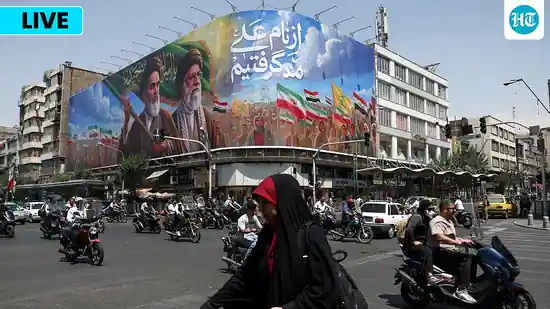
Pakistan has called for an immediate end to the war between the United States and Iran, a day after the two sides engaged in a fresh exchange of missile and drone strikes across the Gulf region that threatened to collapse the fragile ceasefire.
The escalation marks the most significant direct military confrontation between Washington and Tehran since the Pakistan-brokered truce was established on April 8.
Fresh strikes test ceasefire limits
The military friction began early Friday when US forces intercepted four Iranian “one-way attack drones” launched toward the Strait of Hormuz. US Central Command (CENTCOM) stated the drones “posed an immediate threat to regional maritime traffic” and were shot down.
In response, American forces struck Iranian coastal surveillance radar sites in Goruk and on Qeshm Island “to defend against further attacks”.
Hours later, Iran launched a retaliatory ballistic missile barrage. CENTCOM reported that Iran fired seven ballistic missiles toward Kuwait and Bahrain—both host nations for critical US military infrastructure. According to US military assessments, six missiles were intercepted while a seventh failed to reach its target.
The Islamic Revolutionary Guard Corps (IRGC) claimed responsibility, stating it had targeted the Ali Al Salem airbase in Kuwait and the US Navy’s 5th Fleet headquarters in Bahrain.
Pakistan renews peace push
Amid the escalating violence, Pakistan has intensified its diplomatic efforts. Iranian Consul General in Lahore, Mehran Movahed Far, reaffirmed that Tehran values Pakistan’s role in facilitating the ceasefire process, expressing gratitude to Pakistan’s civil and military leadership.
“Iran prefers a sustained ceasefire,” Movahed Far stated, adding that any future talks with the United States would depend on broader conditions, including a ceasefire in Lebanon.
Pakistan’s Interior Minister Mohsin Naqvi is scheduled to travel to Tehran as diplomatic consultations continue regarding mediation between Tehran and Washington. Sources confirm that Islamabad remains committed to its role as a key mediator, with diplomatic communications ongoing through multiple channels.
Iran links any deal to Lebanon ceasefire
Tehran has made clear that any agreement with Washington must include a ceasefire in Lebanon as an essential component. Iranian Foreign Ministry spokesperson Esmaeil Baghaei has stated that discussions currently underway do not involve Iran’s nuclear programme, but stressed that a Lebanon ceasefire is inseparable from any broader understanding.
The IRGC claimed its missile attacks on Kuwait and Bahrain were in retaliation for American strikes on Iranian radar installations, which Tehran called a “flagrant violation” of the ceasefire and “an attack on the national sovereignty” of Iran.
Gulf states condemn attacks
Bahrain and Kuwait both condemned the Iranian attacks, with Bahrain’s defence force calling it a “flagrant violation of international humanitarian law”. Kuwait’s military confirmed it activated air defence systems to counter threats, with the foreign ministry declaring that Kuwait retains the right “to take all necessary measures to preserve its security and defend its territory”.
The United Arab Emirates and Qatar also denounced the Iranian attacks on their Gulf neighbours.
Trump strikes optimistic note
Despite the attacks raising new concerns that the ceasefire could collapse, US President Donald Trump told reporters that “the situation with Iran seems to be going quite well”.
“We’re going to come out of Iran very quickly and it’s going to be very strong one way or the other, whether it’s a piece of paper or the very tough way,” Trump said at an event in Wisconsin.
US and Iranian negotiators had reached a tentative agreement a week ago to extend the ceasefire by 60 days and start a new round of talks on Iran’s nuclear program. However, Trump has called for unspecified changes, and Iranian officials have shown no public signs of signing off on the deal.
Israel ‘not happy’ with Pakistan’s mediation role
In a separate development, Israel’s Consul General in Mumbai, Yaniv Revach, expressed dissatisfaction with Pakistan’s mediating role, though he acknowledged that parties are close to an agreement.
“Of course we’re not happy that the Pakistanis are the one who are mediating, but this is the situation currently,” Revach told ANI.
He added that dialogue has been ongoing for the last two weeks and that parties are near signing an agreement. “Hopefully the next week we’ll know exactly what is the scope of the agreement and how it’s going to be implemented,” he stated.
Lebanon remains critical to any deal
Iran continues to insist that Lebanon be included in any agreement with the United States to end the regional war. Lebanese army commander General Rudolf Haykal has left for Pakistan at the invitation of his Pakistani counterpart, Field Marshal Asim Munir—a visit described by sources as “linked to the Pakistani mediation to resolve issues between the United States and Iran”.