


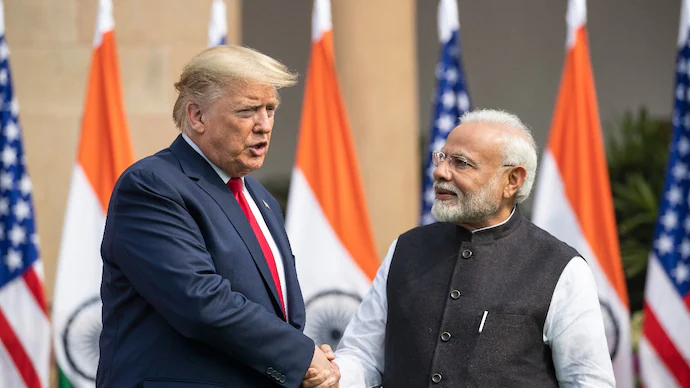
Washington/Delhi: The White House has updated the fact sheet outlining the recently announced India-US trade deal, making key revisions to the document’s language and details days after its initial release. The changes reflect adjustments in how the framework is presented and interpreted, especially regarding the headline figure of $500 billion in intended purchases of U.S. goods by India.
Fact Sheet Revisions and What Changed
The updated fact sheet removed specific mentions of tariffs on pulses and other products that had appeared in earlier drafts, signaling a recalibration of how tariff reductions and market access terms are described. Additionally, the language around India’s purchase of $500 billion worth of American goods was softened — rephrasing it from a definitive commitment to an intention or projection — sparking fresh debate about the practical implications of the trade arrangement.
The revisions suggest that the fact sheet should be viewed more as a policy roadmap or interim summary rather than a legally binding contract, with details still subject to negotiation as both sides proceed toward a formal agreement.
Core Elements of the Trade Framework
Although the fact sheet wording has been adjusted, it continues to outline several key aspects of the broader interim trade framework between India and the U.S.:
- Removal or reduction of U.S. tariffs on Indian imports, lowering average reciprocal tariffs and replacing earlier punitive penalties.
- India’s agreement to reduce or eliminate tariffs on a wide range of U.S. industrial, agricultural, and technology products, including dried distillers’ grains, tree nuts, fruits, certain pulses and beverages.
- A projected increase in India’s purchases of American products — spanning energy, technology, agriculture and industrial goods — with a target figure of $500 billion over a multi-year period.
- Efforts to resolve non-tariff barriers, negotiate rules of origin favorable to both countries, and cooperate on digital trade and economic security standards.
Political and Economic Responses
The revisions have drawn reactions from business and policy circles in both nations. For U.S. officials, the updated fact sheet still represents progress toward deeper economic engagement with India, particularly in sectors where American exporters seek greater access. For Indian leaders, emphasizing that the $500 billion figure reflects intent rather than obligation has been key to addressing concerns in domestic political and economic debates.
While the framework reflects an important milestone in India-US trade relations, critics have noted that many details — including timelines, enforcement mechanisms and legal obligations — remain unresolved as negotiations continue.