


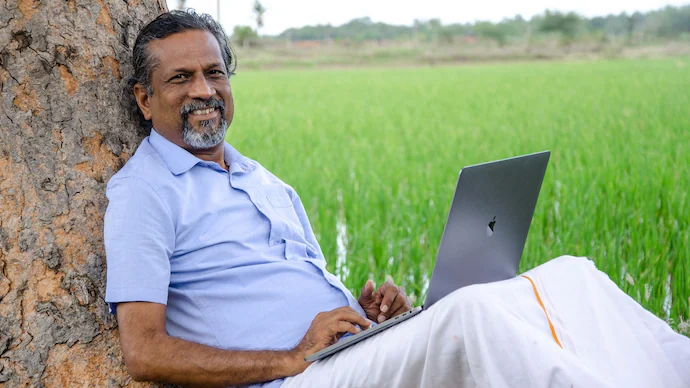
For many office workers, work from home (WFH) seemed like a phase that ended with the pandemic. Companies called employees back to offices, hybrid models were tested and often abandoned, and remote work became the exception rather than the norm.
But a recent appeal by Prime Minister Narendra Modi appears to be reopening that conversation — and one of India’s best-known tech leaders has already responded.
Sridhar Vembu, Chief Scientist at Zoho (and its founder), said the company may reconsider its work-from-home policy after the Prime Minister urged citizens and businesses to adopt measures that could help reduce fuel use and ease pressure on the economy amid rising global tensions and higher energy costs.
Zoho May Reconsider Work From Home
Responding to PM Modi’s appeal, Vembu wrote on X (formerly Twitter) that he hopes people take the message seriously.
“I hope all of us heed the Prime Minister’s appeal,” he wrote.
Vembu added that while Zoho had recently moved back to a full work-from-office model, the company is now open to revisiting remote work.
“As a company, we adopted Work From Office fully in recent months, but we will revisit Work From Home now,” he said.
His comments come at a time when conversations around fuel conservation and rising commuting costs are once again becoming part of public discussion.
PM Modi’s Appeal to Citizens
Prime Minister Narendra Modi recently urged Indians to follow a set of practical measures to conserve energy and reduce dependence on imports as global uncertainty continues.
Among the key suggestions was prioritising work from home wherever possible to reduce fuel consumption.
The Prime Minister also asked people to:
- Cut petrol and diesel use by relying more on public transport such as metros and buses
- Avoid gold purchases for one year
- Reduce the use of cooking oil
- Move towards natural farming and cut dependence on chemical fertilisers
- Encourage locally made products over foreign brands
- Avoid non-essential foreign travel for a year
This appeal came against the backdrop of rising global crude oil prices — from nearly USD 70 per barrel to around USD 126 per barrel — due to escalating tensions in West Asia and disruptions around the Strait of Hormuz.
Zoho’s Focus on Fuel Reduction
Vembu said Zoho is already taking steps in line with some of these ideas.
He stated that the company has adopted natural farming practices on its farms and is actively exploring ways to reduce diesel consumption.
“We have adopted natural farming in our farm and we are also actively looking for ways to cut diesel use,” he wrote.
His response has drawn attention online because it signals that at least some companies may be willing to rethink workplace arrangements if fuel concerns deepen.
The Backstory: Zoho’s Recent WFO Policy
Zoho had recently moved to a full work-from-office model after a period of hybrid and remote work during the pandemic. This decision reflected a broader trend among Indian IT and tech companies, which largely called employees back to physical offices in 2024 and 2025.
Vembu’s statement that Zoho will now “revisit” work-from-home marks a potential reversal. While he did not commit to bringing back full-scale remote work, the willingness to reconsider is itself significant.
Could WFH Discussions Return?
While there is no sign of a broad shift back to pandemic-style remote work, rising fuel prices and concerns over energy supply could push more organisations to rethink commuting-heavy office routines.
For employees spending long hours and large amounts on daily travel, flexible work arrangements may once again become part of the conversation.
Factors that could drive a WFH comeback include:
- Rising petrol and diesel prices — already expected to increase by ₹4-5 per litre before May 15, 2026
- Long commute times in cities like Bengaluru, Chennai, Hyderabad, and Mumbai
- Employee demand for flexibility, particularly among younger workers
- Environmental concerns — reduced commuting lowers carbon emissions
- Government appeals — if PM Modi is asking citizens to save fuel, companies may respond to align with national priorities
The Economic Context: Why Fuel Saving Matters Now
Global crude oil prices have surged from nearly USD 70 per barrel to around USD 126 per barrel due to the Middle East war and disruptions around the Strait of Hormuz (through which nearly 20 per cent of the world’s oil passes).
India is a net importer of crude oil , spending billions of dollars in foreign exchange every year to meet its energy needs. Every dollar increase in crude prices affects India’s trade deficit, currency value, and inflation.
By reducing fuel consumption — through WFH, public transport, carpooling, and other measures — India can lower its import bill and ease economic pressure.
PM Modi’s appeal, therefore, is not just about environmental conservation. It is about national economic security.
Zoho’s History of Employee-Friendly Policies
Zoho has long been known for employee-friendly policies. The company, headquartered in Chennai with development centers across India (including rural locations like Tenkasi and Renigunta), has emphasized:
- Work-life balance
- Employee well-being
- Rural employment and decentralization
- Long-term career growth
Vembu himself has been a vocal advocate for moving tech jobs out of overcrowded cities and into smaller towns. This philosophy aligns naturally with remote and flexible work arrangements.
If any major Indian tech company were to lead a WFH revival, Zoho would be a likely candidate.
What Other Companies Might Do
Vembu’s response has drawn attention because it signals that at least some companies may be willing to rethink workplace arrangements if fuel concerns deepen.
Whether more companies follow Zoho’s lead remains to be seen. Larger IT services companies (TCS, Infosys, Wipro, HCL) have largely moved to hybrid models with mandatory office attendance on certain days. They may be slower to respond to government appeals, given their large real estate footprints and client expectations around in-person work.
However, smaller tech companies, startups, and product companies like Zoho have more flexibility to experiment with remote work policies.
Employee Perspective: What Workers Want
Surveys conducted over the past several years have consistently shown that a significant percentage of employees prefer hybrid or remote work options.
Reasons cited include:
- Savings on commute time and cost
- Better work-life balance
- Ability to live in lower-cost areas (away from expensive city centers)
- Reduced stress and burnout
If fuel prices rise significantly (as expected), employee demand for WFH options will likely increase. Companies that offer flexible arrangements may gain a competitive advantage in talent retention and recruitment.
Summary: Key Takeaways from Zoho’s Response
Sridhar Vembu, Chief Scientist at Zoho, responded to PM Modi’s fuel-saving appeal by stating that Zoho will reconsider its work-from-home policy. The company had recently moved to a full work-from-office model but is now open to revisiting remote work. Vembu also noted that Zoho has adopted natural farming practices on its farms and is exploring ways to cut diesel use. PM Modi’s appeal included prioritising work from home to reduce fuel consumption, cutting petrol and diesel use, avoiding gold purchases, reducing cooking oil use, and moving towards natural farming. Vembu hopes people heed the Prime Minister’s message. Whether more companies will follow Zoho’s lead remains to be seen.
A Small Step, But a Significant Signal
Sridhar Vembu’s response to PM Modi’s appeal is not a policy announcement. He did not say that Zoho is bringing back WFH immediately. He said the company will “revisit” the policy.
But in the cautious language of corporate communication, “revisit” is significant. It means the door is open. It means the conversation is restarting.
For millions of office workers who dread long commutes and rising fuel costs, this is a hopeful signal. For companies weighing the trade-offs between office culture and employee flexibility, it is a prompt to think again.
The debate many thought had ended may be quietly making a comeback.
And as Sridhar Vembu wrote: “I hope all of us heed the Prime Minister’s appeal.”