


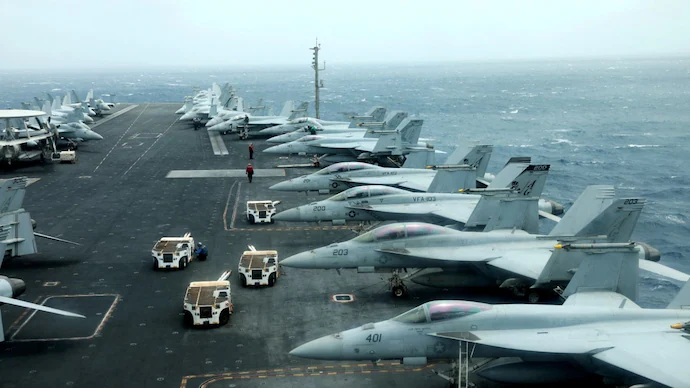
In a major escalation of the conflict, the United States military has carried out strikes on Iranian missile sites along the country’s southern coastline, using powerful 5,000-pound (2,200-kg) bunker buster bombs. The attack, confirmed by the US Central Command (CENTCOM), targeted positions near the strategic Strait of Hormuz.
The strikes come just hours after President Donald Trump revealed that most NATO allies have declined his appeal to send naval ships to escort merchant vessels through the vital waterway, exposing a growing rift between the US and its traditional partners.
The Strikes: Targeting Anti-Ship Missiles
CENTCOM announced the operation early Wednesday (IST), stating that the bombs were used on “hardened Iranian missile sites.”
“Hours ago, U.S. forces successfully employed multiple 5,000-pound deep penetrator munitions on hardened Iranian missile sites along Iran’s coastline near the Strait of Hormuz,” the military command said in a statement.
The military claimed the strikes specifically targeted Iranian anti-ship cruise missiles, which it said “posed a risk to international shipping in the strait.”
The Diplomatic Rift: Allies Refuse to Join
The bombings were announced hours after President Trump publicly stated that most NATO allies had expressed their unwillingness to get involved in the American military campaign in Iran.
While Trump described their refusal as a “very foolish mistake,” he gave no indication of any planned retaliation against the alliance members.
“Everyone agrees with us, but they don’t want to help. And we, you know, we as the United States have to remember that because we think it’s pretty shocking,” he told reporters.
His remarks came just days after he called on nations to send warships to ensure safe passage through the Strait of Hormuz.
| Allied Response | Statement |
|---|---|
| Germany | Foreign Minister Johann Wadephul: “Will we soon be an active part of this conflict? No.” |
| France | President Emmanuel Macron: His country would “never” participate until the situation was calmer. |
The Strategic Context: The Strait of Hormuz
The Strait of Hormuz is a vital chokepoint through which approximately 20% of the world’s oil passes. It has been effectively closed since the first week of March, following the outbreak of the war between Iran and the joint US-Israeli front.
The disruption to cargo ship movements through the strait has already sent global fuel prices soaring. These latest strikes, targeting missiles designed to threaten shipping, underscore the high stakes of the conflict for the global economy.